Is it possible for welfare recipients to live in a shared house?
It is possible for welfare recipients to live in a shared house, but several conditions must be met. Unlike typical rental properties, the key point is whether the size of the private rooms and the way shared spaces are used are recognized as "appropriate housing" under the Public Assistance Act.
Here, we will explain the following points in detail.
- What constitutes "appropriate housing" under the Public Assistance Act?
- Main conditions for living in a shared house
- Reasons why you should consult with a welfare office
- Acceptance conditions vary from property to property.
- How to find a shared house for welfare recipients
What constitutes "appropriate housing" under the Public Assistance Act?
Under the Public Assistance Act, recipients are required to reside in appropriate housing in order to maintain a "minimum standard of living that is healthy and culturally acceptable." "Appropriate housing" in this context refers to housing that meets the following conditions:
- The living space is of a certain size.
- A hygienic environment is provided.
- Privacy is protected.
- The rent is within the limits of housing assistance.
Many shared houses are characterized by small private rooms and a large amount of shared space. Therefore, it is important to note that depending on the property, you may not be eligible for housing assistance under the public assistance system.
Main conditions for living in a shared house
If a recipient of public assistance is to live in a shared house, they must meet the following three conditions:
① The rent must be within the range of housing assistance.
Under the public assistance system, the maximum amount of housing assistance is determined by region. For example, in Tokyo's 23 wards, the maximum housing assistance for single people is 53,700 yen (as of 2024), but it is set lower in rural areas.
If the rent for a shared house falls within the scope of this housing assistance, you can live there while receiving welfare benefits. However, be sure to check the details, as "common area fees and utilities may not be covered by housing assistance" if they are included.
② The property must have private rooms.
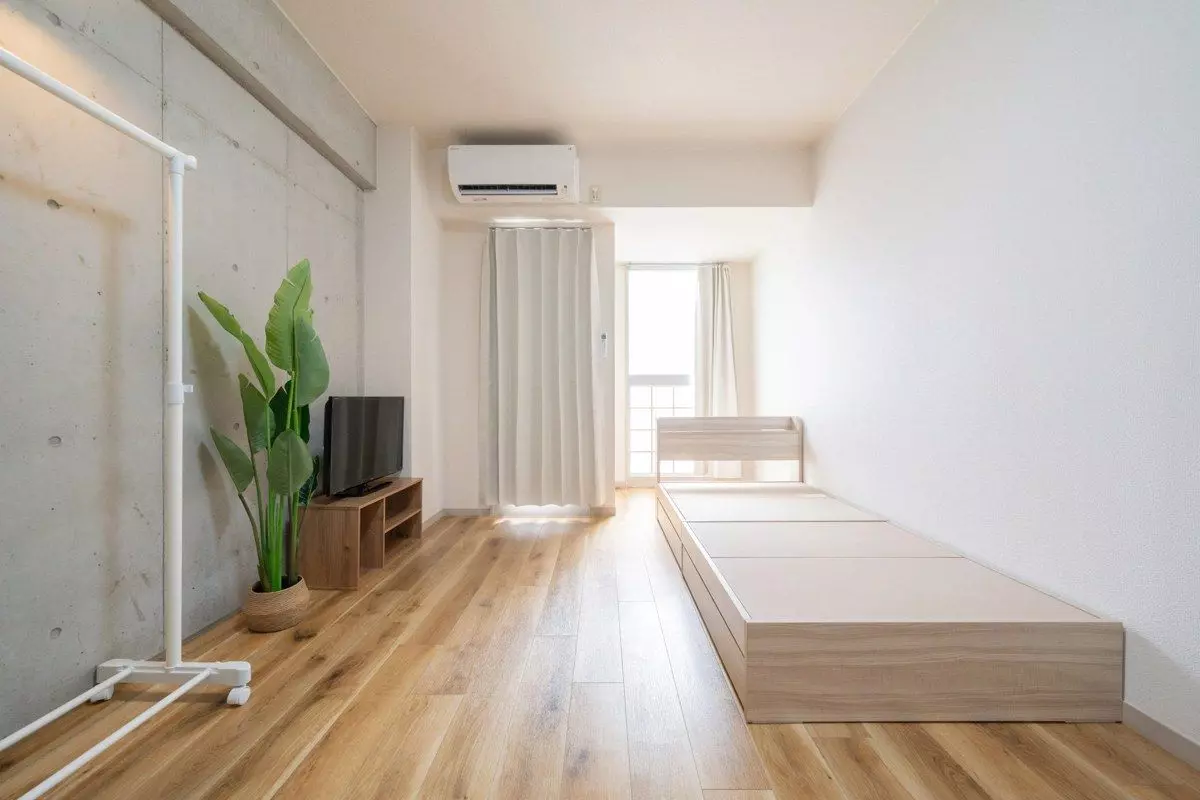
Share houses come in two types: "dormitory type" (shared rooms) and "private room type." In dormitory-type (shared rooms), it is often difficult to qualify for housing assistance under the public assistance system.
On the other hand, if a private room is provided and the property allows for address registration, the chances of passing the welfare office's screening are higher. However, it is important to note that if the private room is extremely small, the property may not be eligible.
③ Household separation has been achieved.
Since welfare benefits are provided on a household basis, you will need to prove that you do not share finances with other residents of the shared house. Therefore, you will need to go through the procedure of "household separation," which involves registering your residency separately.
In particular, if you live in a shared house with relatives or acquaintances, a caseworker may suspect that you are "effectively living together," so it is important to consult with your welfare officer in advance.
Reasons why you should consult with a welfare office
Before moving into a shared house, I strongly recommend consulting with a caseworker at the welfare office. The main reasons are as follows:
- Confirmation that the rent is within the scope of housing assistance.
- A review to determine if the property qualifies as an "appropriate residence"
- Guidance on necessary procedures before moving in (such as household separation)
- Preliminary checks to prevent problems from occurring in the future.
By consulting with a caseworker in advance, you can prevent problems and move into a shared house smoothly.
Acceptance conditions vary from property to property.
Some shared housing properties restrict residency to those receiving welfare benefits. The main reasons for this are as follows:
- The rent payment process is complicated because it goes through the welfare office.
- There is a possibility of disputes between residents.
- It does not meet the standards for a residence (too small, does not provide privacy, etc.)
Therefore, before moving into a shared house, it is essential to always check with the property management company or owner to see if they accept residents receiving public assistance.
How to find a shared house for welfare recipients
The following methods are effective for finding a shared house where welfare recipients can live safely.
① Utilize the Housing Safety Net System
Properties registered under the "Housing Safety Net System" are often approved as housing for welfare recipients. Inquire with your local government or real estate company to see if there are any suitable share houses available.
② Use a real estate company that specializes in services for welfare recipients.
Some real estate companies offer rental support specifically for welfare recipients. Using such companies makes it easier to find shared housing that is accessible to welfare recipients.
③ Find a shared house that is understanding of welfare recipients.
Some share house management companies are proactive in accepting welfare recipients. In particular, share houses operated by social welfare organizations and NPOs often have environments that are suitable for welfare recipients.
What is public assistance? An overview of the public assistance system.
Public assistance is a system designed to enable people in economic hardship to maintain a "minimum standard of living that is healthy and culturally acceptable." It is provided through local governments (welfare offices) according to standards set by the Ministry of Health, Labour and Welfare.
The purpose and mechanism of public assistance
Public assistance is a system in which the national and local governments provide financial support to people who have difficulty earning an income due to illness, disability, unemployment, old age, etc., and who are unable to maintain a minimum standard of living.
This system has two main objectives.
Guaranteeing a minimum standard of living
Article 25 of the Constitution stipulates that "all citizens have the right to maintain the minimum standards of wholesome and cultured living."
Public assistance is a system designed to realize this right and provides the necessary support.
Supporting independence
Welfare assistance is not simply a payment system; it also plays a role in encouraging recipients to become self-reliant through employment.
Therefore, recipients who are actively seeking employment may receive employment support.
Eligibility requirements for receiving public assistance
To receive welfare benefits, you must meet the following five conditions:
1. Income is below the minimum cost of living.
In the public assistance system, assistance is provided based on the "minimum cost of living" set by the Minister of Health, Labour and Welfare, and only if an individual's living expenses fall below this minimum.
Minimum living expenses vary depending on family size and place of residence (urban or rural).
2. Unable to work due to illness or injury
If the recipient is able to work, employment should be the priority.
However, those who have difficulty finding employment, such as the elderly and people with disabilities, are eligible for the benefit.
3. I do not own any property.
If you have assets such as savings, real estate, or a car, you will be required to sell them and use the proceeds to cover your living expenses.
However, exceptions may be made for things necessary for basic living (e.g., owning a home or a car necessary for daily life).
4. Unable to receive other public support such as pensions or allowances.
Before considering welfare benefits, it is necessary to utilize other public support programs such as pensions, unemployment insurance, disability benefits, and child support allowances.
If living expenses are still insufficient, the provision of welfare benefits will be considered.
5. Unable to receive assistance from relatives.
Before applying for welfare benefits, it will be confirmed whether or not you can receive assistance from relatives (such as immediate family members).
However, if relatives are unable to provide financial assistance, you may be eligible for welfare benefits.
Types of public assistance
There are eight types of assistance (subsidies) available under the public assistance system, depending on the recipient's circumstances.
- Living assistance (basic living expenses related to clothing, food, and shelter)
- Housing assistance (rent and housing expenses)
- Educational assistance (tuition and textbook fees necessary for compulsory education)
- Medical assistance (medical expenses)
- Long-term care assistance (long-term care service fees)
- Childbirth assistance (childbirth expenses)
- Livelihood assistance (vocational training expenses)
- Funeral assistance (funeral expenses)
Search for a room
Only furnished properties with appliances are listed!
Amount and use of welfare benefits
Many people receiving public assistance have questions such as, "How much will I actually receive?" and "What expenses can I use the money for?" The amount of assistance varies depending on the region you live in and your family structure, and the necessary support is divided according to its purpose, such as living expenses, rent, and medical expenses. Here, we will explain in detail how the amount of public assistance is determined, how it is used, and points to note. Please use this as a reference to correctly understand public assistance and live a stable life.
Determination of minimum living expenses and allowance amounts
The amount of welfare benefits is determined by the following formula:
Welfare benefits = Minimum cost of living - Household income
Minimum living expenses consist of the following three elements:
- Standard amount of living assistance (food expenses, utilities, daily necessities, etc.)
- Housing assistance standard amount (rent subsidy)
- Regional differences (prices and rent in the area where you live)
Living assistance standards and regional differences
The amount of welfare benefits received varies depending on the region and family structure.
- Urban areas (such as the 23 wards of Tokyo)
→Due to high prices and rents, the allowance amount is set higher.
- Regional areas (Okinawa, Akita, etc.)
→Because prices and rents are low, the amount of assistance is set lower.
Eight types of assistance that qualify for public assistance
①Living assistance
- This covers expenses necessary for daily life, such as food, clothing, daily necessities, and utilities.
- The amount varies depending on family structure, age, and region.
② Housing assistance
- Support for rent and utilities
- The maximum amount is determined by region (e.g., a single person in Tokyo's 23 wards receives ¥53,700 per month).
③Educational aid
- Subsidies are provided for tuition fees, textbook fees, school lunch fees, etc., related to compulsory education.
- High school students and above are not eligible.
④ Medical assistance
- Medical expenses are completely free
- Support for outpatient and inpatient medical expenses, medication costs, and examination fees.
⑤ Long-term care assistance
- Covers the out-of-pocket expenses when using the long-term care insurance system.
- This includes home care, day services, and facility admission fees.
⑥ Childbirth assistance
- Support for childbirth expenses (delivery fees, check-up fees, etc.)
- Medical expenses before and after childbirth are also covered.
⑦ Livelihood assistance
- Support for vocational training and job-seeking expenses
- We also provide subsidies for the purchase of work tools, if necessary.
⑧ Funeral assistance
- Funeral expenses (cremation fees, transportation fees, etc.) will be reimbursed.
- Applies only in the event of the recipient's death.
Points to note regarding fraudulent receipt of benefits
When receiving welfare benefits, rules are in place to prevent fraudulent claims.
- Concealing income while receiving benefits
- Not reporting financial support from family
- Using welfare benefits for purposes other than intended.
If fraudulent receipt of benefits is discovered, you may be required to repay the benefits and face penalties, so it is important to report accurately.
Flow of the application process for welfare benefits
When applying for public assistance, you will need to go through the procedures at the welfare office (the welfare department of your city, ward, town, or village). The process from application to receiving benefits involves the following five steps:
① Consult with the welfare office.
First, go to the welfare office that has jurisdiction over your place of residence and consult about applying for public assistance.
Recommended items to bring
- Identity verification documents (driver's license, My Number card, health insurance card, etc.)
- Documents that show your current living situation (income certificate, bank passbook, household budget book, etc.)
- Documents related to housing (rental agreement, utility bills, etc.)
We will explain your financial difficulties and confirm whether you are eligible for assistance. In some cases, the welfare office may suggest using support programs.
② Submission of required documents
When applying, you will need to submit the necessary documents for the welfare assistance assessment. The main documents to be submitted are as follows:
[Main documents to be submitted]
- Application form for public assistance (distributed at the welfare office)
- Identity verification documents (My Number Card, driver's license, passport, etc.)
- Resident record
- Proof of income (pay slips, pension notices, unemployment benefit statements, etc.)
- Copy of bank passbook
- Proof of asset status (possession of cars or real estate)
- Information regarding those with a duty of support (confirmation of whether assistance can be sought from relatives)
Once all the necessary documents are ready, submit them to the welfare office, and the formal application process will begin.
③ Home visit by a caseworker
When you apply for welfare benefits, a caseworker will visit your home to conduct an investigation into your living situation.
[Information to be confirmed during the visit]
- Living environment (conditions of residence, hygiene, etc.)
- Personal belongings (assets such as expensive home appliances, cars, and precious metals)
- Actual income and expenses (rent, utilities, food, and other expenses)
- Health status and ability to work
A home visit by a caseworker is a crucial step in determining whether the applicant is truly in financial difficulty. Since making a false application could be considered fraudulent, it's important to be honest about your current situation.
④ Assessment of living conditions
Based on the caseworker's findings, the welfare office will assess whether or not you are eligible for public assistance.
[Points to consider during the review process]
- Is the total household income below the minimum cost of living?
- Can savings and assets be used to maintain one's lifestyle?
- Are there other public support systems available (such as pensions, allowances, or unemployment insurance)?
- Is it possible to receive financial support from relatives?
- Future possibilities for independence
The review process typically takes about two weeks to one month.
⑤ Payment decision
If your application is approved for public assistance, the payment of living allowances, housing allowances, and other benefits will begin.
- Payment start date: Payments are generally made retroactively to the first day of the month in which the application was submitted.
- Payment method: Transfer to the designated account of the welfare office.
- Determination of payment amount: Varies depending on household composition, place of residence, and income level.
Even after payments begin, you will need to have regular meetings with your caseworker and report your income.
Search for a room
Only furnished properties with appliances are listed!
Housing options for welfare recipients
Recipients of public assistance are required to secure appropriate housing in order to live a stable life. The following four options are possible for housing after receiving assistance:
① Rental apartments and condominiums
A common housing option is to rent an apartment or condominium.
point
- Rent must be within the limits of housing assistance.
- You may be eligible for assistance with security deposits and key money.
- A permit from the welfare office is required for the rental agreement.
Before securing housing, it is important to consult with a caseworker and choose a property that falls within the maximum amount of housing assistance you can receive.
② Public housing
Public housing operated by local governments, such as municipal housing, prefectural housing, and UR rental housing, is also an option.
point
- The rent is cheaper than regular rental properties.
- In some cases, there are priority housing slots available for those receiving public assistance.
- However, due to the large number of applicants, there may be a long waiting period before you can move in.
You can apply for public housing through your local government's housing department or welfare office.
③ Simple lodging facilities
It is often used as a short-term living base by people who have suddenly lost their homes or are experiencing homelessness.
point
- Many systems require payment per night.
- Living conditions may be poor.
- Some accommodations are in cooperation with welfare offices.
While budget accommodations offer a temporary housing option, they are not suitable for long-term stays, so you will need to consult with a caseworker to find your next place of residence.
④ Shared housing (possible under certain conditions)
Even those receiving welfare benefits can live in a shared house if they meet certain conditions.
point
- The rent must be within the range of housing assistance.
- A private room must be secured (shared rooms are not permitted).
- The property must be one where you can register your residency.
- Does the management company permit residents receiving welfare benefits to live there?
Share houses offer the advantage of lower rent and reduced initial costs, thus easing the financial burden. However, permission from the welfare office is required, so be sure to consult with them beforehand.
Advantages of living in a shared house
There are many economic and psychological benefits for people receiving welfare benefits to live in a shared house. In particular, there are advantages that are not available to those living alone, such as reduced rent burden and reduced feelings of loneliness through interaction with other residents.
Here, we will explain in detail the three main benefits that welfare recipients can gain from living in a shared house.
Reducing the financial burden
The biggest advantage of living in a shared house is that it helps reduce living expenses. While housing assistance is included in welfare benefits, recipients are required to secure housing that falls within that limit. Shared houses can save money compared to renting for the following reasons:
① Low rent
- In many cases, the rent is set lower than that of a rental apartment.
- You can live in the city center with lower rent (it's easier to stay within the limits of housing assistance).
- Some properties offer short-term contracts, making it easier to move to a new place depending on your circumstances.
For example, the maximum housing allowance for a single person receiving public assistance in Tokyo's 23 wards is 53,700 yen, but it can be difficult to find a regular rental property within this range. In contrast, many shared houses offer properties for around 30,000 to 50,000 yen, making it possible to live within the housing allowance limit.
② You can save on utility bills and internet costs.
- In many shared houses, the rent includes water, gas, electricity, and internet.
- Since residents can share the common area maintenance fees, the burden is less than living alone.
- Since appliances such as refrigerators, washing machines, and microwave ovens can be shared, there are no purchase costs.
Typically, people living alone often spend over 10,000 yen a month on utilities and internet, but in a shared house, these costs are often included in the rent, significantly reducing expenses.
③ Low initial costs
- Many properties do not require a security deposit or key money (which can cost over 100,000 yen in typical rentals).
- Many properties come furnished with furniture and appliances, which helps to reduce moving costs.
- The initial move-in costs are minimal, and you can start living there right away.
While typical rental properties often require a security deposit, key money, and guarantee money upon moving in, share houses offer lower initial costs and provide an environment that is more accessible even for those receiving welfare benefits.
It can reduce feelings of loneliness and help build relationships.
Many people receiving welfare benefits struggle with a weakened sense of social connection. For the elderly and those living alone, reducing feelings of loneliness is a particularly important issue.
① Interaction with other residents will occur.
- Interaction naturally arises in shared spaces (living room, kitchen, etc.).
- Residents living in the same environment can consult with each other about matters related to daily life.
- You can enjoy meals and hobbies with other people.
In particular, for the elderly and people with disabilities, who tend to have weaker social connections, living in a shared house can be expected to reduce feelings of loneliness and bring about emotional stability.
② We can help each other in times of trouble.
- Other residents will notice when you're feeling unwell.
- It is easy to build relationships where residents help each other.
- It's easy to exchange information, and you can also get advice on government procedures.
Living alone carries the risk of going unnoticed in case of sudden illness or disaster, but in a shared house, it's easier to create an environment where residents can help each other.
Easy to use as a step towards independence
Many people receiving welfare benefits aim to become self-reliant by finding employment in the future. Share houses are suitable as "intermediate housing" for that purpose.
① Lower living costs make job hunting easier
- Because the rent is cheap, you can save money and prepare for your next life.
- Share houses in the city center offer great convenience for commuting to work or school.
- The availability of a good internet connection makes it easier to proceed with job hunting.
Even while looking for a job, you can live on a minimal cost of living, creating an environment that makes it easier to prepare for independence.
② Short-term contracts are available, allowing for relocation as needed.
- While typical rental properties often have a two-year lease term, some share houses offer shorter-term contracts.
- It is easy to use as "temporary housing until you find your next place to live".
- Because it's easy to move, it's possible to move to a suitable residence after securing a job.
If you're looking to get off welfare in the future and secure a stable job and housing, a shared house is an ideal environment for preparing for independence while keeping costs down.
Search for a room
Only furnished properties with appliances are listed!
Points to note when welfare recipients live in a shared house
While it is possible for welfare recipients to live in a shared house, there are several points to check and rules to be aware of beforehand. In particular, obtaining permission from the welfare office, paying rent within the scope of housing assistance, and reviewing the contract details are crucial. This article will explain in detail the points to consider when choosing a shared house as a welfare recipient, and precautions to take to avoid problems.
Conditions for welfare recipients to live in a shared house
Share houses are cheaper than rental apartments or condominiums and are suitable for saving on living expenses, but you need to check whether they qualify for housing assistance under the public assistance system.
① Obtain permission from the welfare office in advance.
If you are receiving public assistance, you must consult with the welfare office (caseworker) in advance and obtain permission before changing your address.
- Check if the rent falls within the range of housing assistance.
- Checking if the contract terms for the shared house are appropriate.
- Is it possible to register as a resident?
Some shared housing options may involve short-term contracts or restrictions on residency registration. Therefore, it is important to consult with the welfare office in advance to confirm whether you can move in without any problems.
② Can you pay the rent within the scope of housing assistance?
Housing assistance under the public assistance system has regional limits. For example, the maximum housing assistance for single people in Tokyo's 23 wards is 53,700 yen, but it may be even lower in rural areas.
Points to check when checking rent
- Is the rent within the range of housing assistance?
- Check if common area maintenance fees and utility costs are included in housing assistance.
- Is the rent paid directly by the welfare office, or is it reimbursed after the self-payment?
While shared housing offers lower rent, the total cost, including utilities and common area fees, may exceed the maximum amount covered by housing assistance, so be sure to carefully review the contract details.
③ Procedures for separating households may be required.
Since welfare benefits are generally provided on a "household basis," being considered to share a household with other residents of a shared house may affect your eligibility for benefits. Therefore, you will need to go through the procedure to separate your household and prove that you are living separately from the other residents.
Points to note when separating households
- Proof that I keep my finances separate from those of my housemates.
- I reported to the caseworker that we were not sharing living expenses.
- Choose a property where you can register your address individually on your resident registration.
In particular, if you live in a shared house with relatives or acquaintances, you may not be eligible for welfare benefits, so careful consideration is necessary.
Carefully check the details of the share house contract.
Share house contracts often differ from regular rental agreements, so it's important to carefully review the contract details.
① Contract type: "Fixed-term lease agreement" is the most common.
It's important to note that in shared housing, "fixed-term lease agreements" are common, which differ from regular rental properties.
- The contract has a fixed term and may not be renewable.
- In many cases, contract renewal is required.
- It is important to check the terms and conditions for early termination.
In the case of short-term shared housing contracts, there is a possibility that you may not be able to continue living there after the contract expires, so if you wish to live there for a long period of time, be sure to check the contract details in advance.
② Check if you can register your residency.
To receive welfare benefits, you need to be registered as a resident. However, some shared houses do not allow resident registration.
Points to note regarding resident registration
- If you cannot register your residency, you may not be able to apply for or continue receiving welfare benefits.
- Before signing a contract, be sure to check with the management company whether it is possible to register your residency there.
- If you are unable to register, consider other properties.
Failure to register your residency can affect not only procedures for receiving welfare benefits, but also various applications at government offices and medical expense assistance, so caution is advised.
Points to keep in mind when living together
Since you'll be living with multiple residents in a shared house, it's important to be aware of the rules and manners to avoid problems.
① Follow the rules of the shared spaces
- Check the rules for using common areas such as the kitchen, toilet, and living room.
- If there are management rules such as taking out the trash or taking turns cleaning, it is necessary to follow them.
- Understand the rules for quiet times.
To avoid conflicts with other residents, it's important to understand the rules for using shared spaces beforehand and to act appropriately.
② Consider the stress caused by differences in lifestyle.
- If your lifestyle doesn't match that of other residents, it can be stressful.
- There is a possibility of noise problems occurring in the early morning or late at night.
- It's a good idea to check the composition of the residents (age range, occupation, etc.) beforehand.
To avoid stress caused by differences in lifestyle, it's important to carefully check the atmosphere among the residents and the rules of the share house before moving in.
summary
Even those receiving public assistance can live in a shared house, but it's crucial that the rent is within the scope of housing assistance, that a private room is secured, and that permission is obtained from the welfare office. Additionally, procedures such as registering residency and separating households may be required, so be sure to check beforehand. Shared houses offer advantages such as saving on rent and utilities, and maintaining social connections, but careful attention must be paid to the contract details and rules of communal living. Choose a suitable property and create a safe and secure living environment.