Is it really that difficult to live alone on a net income of 160,000 yen?
If you're living alone on a net income of 160,000 yen, you're probably wondering, "Can I live on this?", "Can I save money?", and "How much financial leeway will I have?". In short, it is possible to live on this amount, but it can be difficult depending on where you live and how you manage your expenses. Here, we'll explain in detail the breakdown of income, estimated living expenses, and actual living standards for someone with a net income of 160,000 yen.
Breakdown of net income of 160,000 yen (gross salary, taxes, deductions)
A net pay of 160,000 yen refers to the "actual amount received" after taxes and social insurance contributions have been deducted. To earn this net pay, a gross salary (total amount paid) of approximately 200,000 yen is required.
Example of salary calculation for a net income of 160,000 yen (after deductions for social insurance and taxes)
| item | Amount (estimated) |
| Gross salary | 200,000 yen |
| health insurance | Approximately 10,000 yen |
| Employees' Pension Insurance | Approximately 18,000 yen |
| Employment insurance | Approximately 1,000 yen |
| income tax | Approximately 3,000 yen |
| Resident tax | Approximately 12,000 yen (may not be required for first-year new graduates) |
| Net pay | Approximately 160,000 yen |
The burden of employee pension and resident tax is particularly heavy, with approximately 20% of the gross salary being deducted. Furthermore, there is a difference in annual income depending on whether or not a bonus is received; without a bonus, the annual income is 1.92 million yen, while with a bonus (equivalent to two months' salary), it is approximately 2.3 million yen.
Major living expense items and estimated amounts
Let's take a look at what kind of expenses you might incur if you live alone on a net income of 160,000 yen.
Below is a summary of estimated monthly expenses, including rent, food, and utilities.
Breakdown of living expenses (example in Tokyo)
| item | Amount (estimated) |
| rent | 50,000 to 70,000 yen (possibly in the 50,000 yen range outside of Tokyo's 23 wards) |
| Water and utility costs | 10,000 yen (electricity, gas, water) |
| Communication costs (smartphone + Wi-Fi) | 7,000 yen (or even less than 5,000 yen if you use a budget SIM) |
| Food expenses | 30,000 yen (mainly home cooking) |
| Transportation expenses | 5,000 to 10,000 yen (depending on work location) |
| Daily necessities and miscellaneous expenses | 5,000 yen |
| Entertainment and social expenses | 10,000 yen |
| saving | 10,000 yen to 20,000 yen |
| total | Approximately 130,000 to 160,000 yen |
Saving money is possible if you cut back on rent and food expenses, but it's clear that there won't be much room for extra spending. You also need to be prepared for unexpected expenses (medical expenses, appliance replacements, weddings and funerals).
Actual living standards (what you can and cannot do)
Living alone on a net income of 160,000 yen is possible, but what you can and cannot do will become clear depending on your lifestyle.
What you can do with a net income of 160,000 yen
- If you live in an apartment with rent under 50,000 yen, you can save money.
- You can save money on food by cooking at home (around 20,000 to 30,000 yen).
- Reduce fixed costs by switching to a low-cost SIM plan and reviewing your electricity provider.
- Utilize Free or low-cost entertainment options (parks, libraries, subscriptions).
Things you "cannot do" with a net income of 160,000 yen
- Living in a room in Tokyo with a rent of 70,000 yen or more will put you in the red.
- It's difficult to spend money on weekly drinking parties, eating out, and hobbies.
- It's difficult to bear the cost of maintaining a car (gasoline, insurance, parking fees).
- It's difficult to prepare for unexpected expenses (weddings, funerals, medical expenses, appliance breakdowns).
In particular, the cost of rent is a major factor in determining one's financial stability. While rent can be kept lower in rural areas, living alone in the city center is either "barely making ends meet" or "requiring strict budgeting."
Living expenses simulation based on a net income of 160,000 yen
For someone living alone on a net income of 160,000 yen, controlling rent and living expenses is key to determining their financial stability. While saving is essential in urban areas due to high rents, it's generally easier to keep rent down in rural areas, allowing for greater financial flexibility. This article compares the differences in living expenses between urban and rural areas, providing a detailed explanation of lifestyle and savings possibilities based on rent levels.

Living simulation in urban areas (Tokyo and Osaka)
For those living alone in urban areas such as Tokyo or Osaka, the biggest challenge is the high cost of rent and living expenses. Especially because rent is so expensive, it's highly likely that you'll struggle to make ends meet unless you save money.
Cost of living simulation in urban areas (Tokyo's 23 wards and Osaka City)
| item | Tokyo (rent 65,000 yen) | Osaka city (rent 60,000 yen) |
| rent | 65,000 yen | 60,000 yen |
| Water and utility costs | 10,000 yen | 9,000 yen |
| Communication costs (smartphone + Wi-Fi) | 7,000 yen | 7,000 yen |
| Food expenses (home cooking + minimal eating out) | 30,000 yen | 27,000 yen |
| Transportation expenses (passenger fare + daily transportation) | 10,000 yen | 8,000 yen |
| Daily necessities and miscellaneous expenses | 5,000 yen | 5,000 yen |
| Entertainment and social expenses | 10,000 yen | 10,000 yen |
| saving | 5,000 yen | 10,000 yen |
| total expenditure | 142,000 yen | 136,000 yen |
- When rent is in the 60,000 yen range, it accounts for a large portion of living expenses.
- If you don't cut back on food and communication expenses, you'll hardly be able to save any money.
- Saving money is essential for city living (cheap SIM cards, cooking at home, considering shared housing).
If you live in Tokyo or Osaka, paying more than 60,000 yen in rent can easily leave you with little financial leeway, so you need to carefully choose where you live.
Life simulation in rural areas (designated cities and suburbs)
Living in rural areas or suburbs means lower rent, which reduces the burden of living expenses.
However, since car maintenance and transportation costs can be higher than in urban areas, it's important to consider the overall balance.
Cost of living simulation in rural/suburban areas (Sendai, Fukuoka, Chiba)
| item | Sendai City (rent: 45,000 yen) | Fukuoka City (rent: 50,000 yen) | Suburbs of Chiba Prefecture (rent: 55,000 yen) |
| rent | 45,000 yen | 50,000 yen | 55,000 yen |
| Water and utility costs | 8,000 yen | 8,000 yen | 9,000 yen |
| Communication costs (smartphone + Wi-Fi) | 6,000 yen | 6,000 yen | 7,000 yen |
| Food expenses (mainly home cooking) | 25,000 yen | 26,000 yen | 28,000 yen |
| Transportation expenses (car/train) | 12,000 yen (with car) | 7,000 yen | 9,000 yen |
| Daily necessities and miscellaneous expenses | 5,000 yen | 5,000 yen | 5,000 yen |
| Entertainment and social expenses | 10,000 yen | 10,000 yen | 10,000 yen |
| saving | 20,000 yen | 15,000 yen | 10,000 yen |
| total expenditure | 131,000 yen | 127,000 yen | 133,000 yen |
- Because rent is Affordable, it's easier to save money than in urban areas.
- In rural areas, you need to be careful about car maintenance costs (gasoline and insurance).
- Transportation costs tend to be high in suburban areas of the Kanto region, such as Chiba.
In rural areas and suburbs, there are many properties with rents of 50,000 yen or less, making it easier to keep fixed costs down and allowing for a relatively comfortable lifestyle.
Search for a room
Only furnished properties with appliances are listed!
Tips for living comfortably on a net income of 160,000 yen
If you're living alone on a net income of 160,000 yen, how much you can save on monthly living expenses will determine the stability of your life. In particular, reviewing costs such as rent, fixed expenses, food expenses, and communication expenses can make it possible to live comfortably without financial strain. Here, we will explain specific ways to reduce living expenses and live stress-free.
Tips for keeping rent down (area and property selection)
Rent is the largest expense each month, so it's important to keep it as low as possible.
However, prioritizing only low prices can lead to longer commutes or a poorer living environment, so choose your area and property carefully.
Specific ways to reduce rent
- Choose an area slightly outside the city center: You can often find significantly cheaper rent in areas about 30 minutes by train from the city center.
- Choose an older property: Properties that are 20 years old or older tend to have lower rents than newly built or recently constructed properties.
- Look for properties that are more than a 10-minute walk from the station: Properties close to the station tend to have higher rents, so choosing a location a little further away can help keep costs down.
- Utilize shared housing: If living alone is difficult, choosing shared housing can significantly reduce rent and utility costs.
We will discuss how to utilize shared housing in more detail later.
Ways to reduce fixed costs (utilities, communication costs, food costs)
Reviewing your fixed expenses within your monthly spending can lead to significant savings.
In particular, optimizing utility bills, communication costs, and food expenses is important.
Ways to reduce utility bills
- Review your electricity provider and switch to a Affordable plan.
- Set the air conditioner temperature appropriately to reduce unnecessary electricity costs.
- Shortening shower times can save on gas costs.
Ways to reduce communication costs
- By switching to a low-cost SIM card, I can reduce my smartphone bill to less than 3,000 yen per month.
- Review your home internet connection and consider using mobile Wi-Fi or similar options.
Ways to reduce food expenses
- I try to cook at home as much as possible and reduce the number of times I eat out.
- Buy in bulk to reduce unnecessary purchases.
- Use Affordable supermarkets or wholesale supermarkets to keep costs down.
Lower your living costs with home cooking and money-saving techniques.
Cooking at home is the most effective way to save money on food. However, to continue cooking at home, you need to reduce the effort involved and find ways to make it easier.
Tips for continuing to cook at home
- Use easy-to-make recipes to prepare meals quickly.
- Make use of pre-made meals to create an environment where you can cook for yourself even when you're busy.
- I plan menus that focus on Affordable ingredients to keep food costs down.
Additionally, the following techniques are also effective for saving money.
- Reduce the cost of daily necessities by utilizing 100-yen shops.
- Reduce shopping expenses by using coupons and points.
You can save 5,000 yen a month just by reviewing your smartphone and subscriptions.
By reviewing your smartphone plan and subscription services, you can save over 5,000 yen per month.
How to review your smartphone plan
- By switching to a low-cost SIM plan, you can reduce your monthly smartphone bill by more than half.
- Change your data plan to a more appropriate one and reduce unnecessary data usage.
Organize your subscriptions
- Cancel any subscriptions you're not using, such as video streaming services, music services, and online courses.
- Focus on one service and reduce unnecessary spending.
For example, by saving 3,000 yen on your smartphone's communication costs and canceling two unnecessary subscriptions, you can save more than 5,000 yen per month.
If living alone is difficult on a net income of 160,000 yen, a shared house is a great option!
Living alone on a net income of 160,000 yen can be difficult due to the burden of rent and living expenses, making it hard to save money. In such cases, a "share house" is a good option. With a share house, you can keep rent and utility costs down, and it comes furnished with appliances and has Affordable registration fee , making it an attractive option for people with a net income of 160,000 yen.
Here, we will explain in detail the system of shared housing, its advantages and disadvantages, and a simulation of actual living expenses.

What is a share house? A type of housing that significantly reduces rent and utility costs.
A share house is a type of housing where multiple residents share a single residence.
Generally, private rooms are provided, while the kitchen, Living room, and Bathroom are shared.
Features of a shared house
- Rent is Affordable(even in Tokyo, the going rate is around 30,000 to 60,000 yen).
- Utilities and Wi-Fi fees are often included in the common service fee.
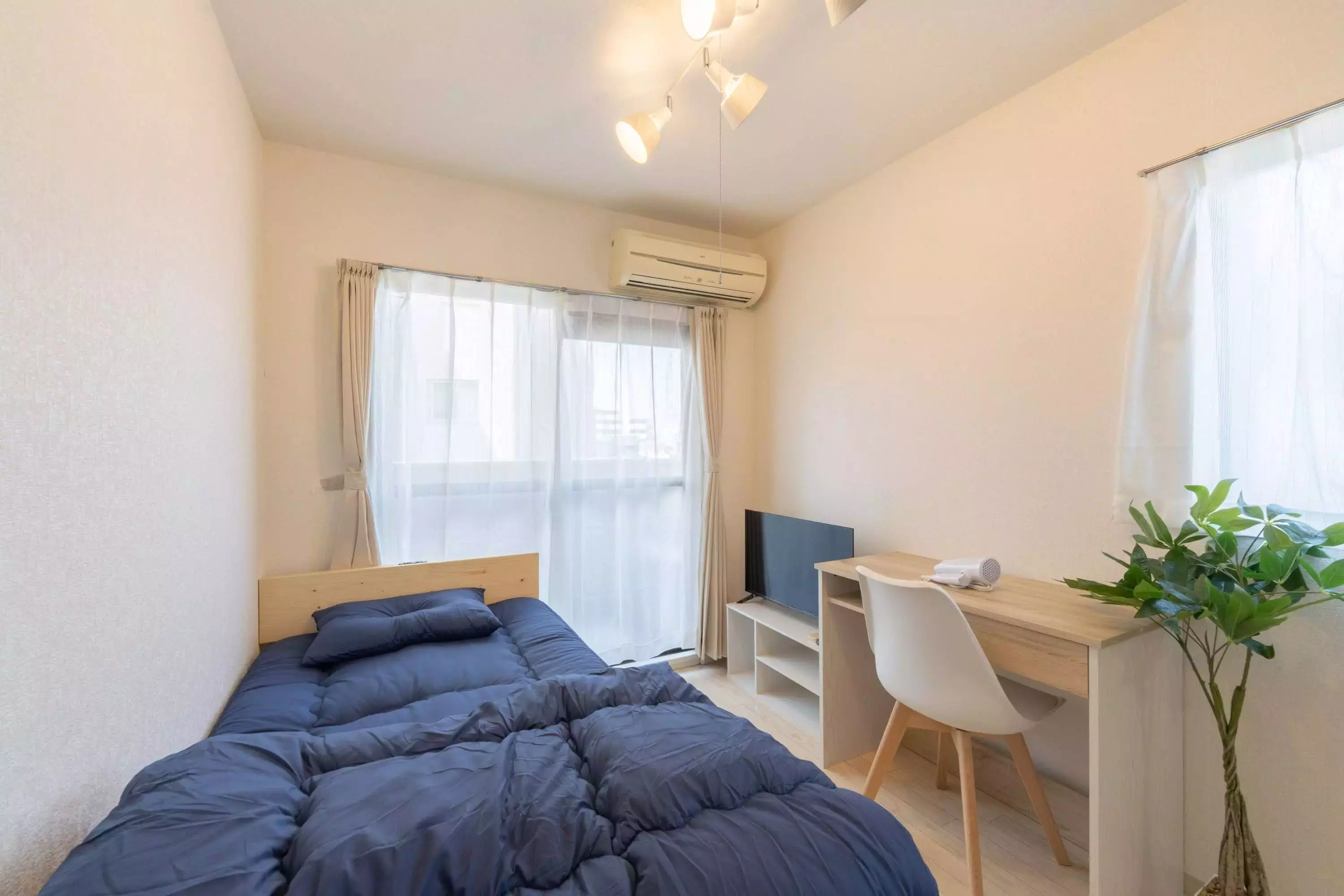
- It comes furnished with furniture and appliances, which helps keep registration fee down.
- You can interact with other residents.
For example, renting a studio apartment in Tokyo typically costs over 60,000 yen in rent plus 10,000 yen for utilities,
Living in a shared house can result in significant savings, as rent can be as low as 40,000 yen plus 10,000 yen in common service fee.
Advantages and disadvantages of shared housing
While shared housing offers the significant advantage of lowering living costs, it also has its own set of disadvantages inherent to communal living.
Here, let's compare the advantages and disadvantages of living in a shared house.
<Advantages of living in a shared house>
- Affordable rent and utility costs
- The rent is about 10,000 to 20,000 yen Affordable than a typical rental.
- Utility costs and Wi-Fi fees are often included in the common service fee.
- Furniture and appliances are provided.
- It comes furnished with a bed, desk, refrigerator, washing machine, etc.
- Because registration fee are kept low, the burden of moving is reduced.
- Interaction among residents will increase.
- You can enjoy meals and events with your housemates.
- It's easy to make new friends and exchange information.
<Disadvantages of shared housing>
- Privacy will decrease
- While there are private rooms, the Living room, kitchen, and Bathroom are shared.
- Depending on the lifestyles of other residents, it can sometimes be noisy.
- Stress of living together
- If the residents' values don't align, it could lead to trouble.
- You need to follow the rules and take turns cleaning, etc.
A realistic simulation of living expenses for people actually living in a shared house.
Let's simulate how much you can save on living expenses by living in a shared house, specifically in Tokyo.
Comparison of living costs between a typical studio apartment and a shared house.
| item | One-room apartment | Share house |
| rent | 65,000 yen | 40,000 yen |
| Utilities/Wi-Fi | 12,000 yen | 10,000 yen *Often set as common service fee. |
| Food expenses | 30,000 yen | 25,000 yen |
| Transportation expenses | 10,000 yen | 10,000 yen |
| Daily necessities and miscellaneous expenses | 5,000 yen | 5,000 yen |
| Entertainment and social expenses | 10,000 yen | 10,000 yen |
| total expenditure | 132,000 yen | 100,000 yen |
Key points for living in a shared house
- Living in a shared house can save you over 30,000 yen per month compared to a studio apartment!
- You can use the money you save for savings or hobbies!
If you'd like to learn more about the registration fee of living in a shared house, please also check out this article.
What kind of person is suited to living in a shared house?
Share houses are recommended for people who want to keep their rent down but also want a comfortable lifestyle.
People who are suited to living in a shared house
- People who want to reduce rent and living expenses
- People who want to move without buying furniture or appliances
- People who dislike the loneliness of living alone
- People who want to live somewhere for a short period of time while keeping registration fee down.
If you'd like to learn more about the characteristics, age range, and lifestyles of people living in shared houses, please check out this article.
People who are not suited to living in a shared house
- People who value privacy
- People who are not good at living with others
- People who return home late at night due to work (potential noise issues)
If you're unsure whether a shared house is really right for you, or if you want to know about alternative options if it's not suitable, check out this article!
How to find and choose a shared house
Finding a share house is different from finding a typical rental property, so it's important to know the key points when searching.
How to find a shared house
- Find a share house through a specialized website: Use "XROSS HOUSE"
- Visit the House viewing to check the actual atmosphere: assess the residents' demeanor and the management situation.
- Carefully review the rules and contract details: Check things like cleaning schedules and noise rules to ensure they won't cause you stress.
Points to consider when choosing
- Accessibility (distance to the station, commute time)
- The total amount of rent and common service fee(can fixed costs be kept down?)
- Resident demographics (age group and lifestyle)
- The size and soundproofing of the private room (whether it's comfortable to stay in)
Search for a room
Only furnished properties with appliances are listed!
Income-increasing strategies for a net income of 160,000 yen
Living alone on a net income of 160,000 yen can be challenging, with rent and living expenses being a heavy burden, making saving money difficult. However, increasing your income can create more financial flexibility. This article explains how to increase your net income through side jobs, skill development, and job changes.
Earn an extra 30,000 yen per month through a side job or part-time work.
If you want to increase your income right now, a side job or part-time work is the easiest way. By utilizing your free time, you can earn an additional 30,000 yen or more per month. Easy side jobs for beginners include web writing, data entry, video editing, and reselling. Delivery work, such as Uber Eats, is also popular because it allows you to earn quick income by utilizing your spare time. Choose a side job that suits your skills and lifestyle, and gradually increase your income.
Aim for a raise by obtaining qualifications and improving skills.
If you want to increase your income from your main job, acquiring qualifications and improving your skills are effective methods. For administrative positions, obtaining qualifications such as Microsoft Office Specialist or bookkeeping can be advantageous when seeking raises or changing jobs. For sales positions, English language qualifications such as TOEIC can be beneficial. In the real estate industry, obtaining a real estate agent license may result in a qualification allowance. By improving your skills, you can expect a stable increase in income in the long term.
How to aim for a net income of 200,000 yen or more through a job change
If you can't expect a raise in your current job, considering a career change is one option. The IT industry and sales positions, in particular, offer the potential for relatively high incomes even without prior experience. Sales positions often offer performance-based incentives, allowing you to increase your annual income depending on your efforts. Factory work and logistics jobs can also increase your take-home pay through night shift allowances and overtime pay. To successfully change jobs, it's important to utilize a recruitment agency to find better-paying positions.
Key points for finding a job or changing jobs at a company that offers bonuses and allowances.
Even with a net monthly salary of 160,000 yen, you can increase your annual income by choosing a company with generous bonuses and allowances. Major manufacturers and financial institutions sometimes offer bonuses exceeding 1 million yen annually. Furthermore, choosing a company with housing and qualification allowances can help increase your income while keeping monthly fixed expenses down. When considering a job change, be sure to check not only the base salary but also the bonuses and allowances to aim for an overall increase in income.
Real voices from people who actually live on a net income of 160,000 yen.
Many people feel that living alone on a net income of 160,000 yen is difficult, but when you hear from people who actually live on this income, it's possible to live comfortably with some ingenuity. On the other hand, some people feel it's impossible and return to their parents' home, while others live comfortably by utilizing shared housing. Here, we will introduce the realities of living on a net income of 160,000 yen, including success stories and failures.
"You can actually live comfortably if you save money!" - Success stories
Many people who successfully live alone on a net income of 160,000 yen are very diligent about saving money. Keeping rent low is especially important, and those living in suburban apartments with rent in the 40,000 yen range seem to be able to live comfortably. Many also make cooking at home a habit to keep food expenses under 20,000 yen, and reduce fixed costs by transfers to cheap SIM cards for their smartphones and electricity providers. Furthermore, some earn an extra 10,000 to 30,000 yen a month through side jobs, giving them more financial leeway.
"It was impossible after all..." Lessons learned from failures
On the other hand, some people have found it difficult to continue living alone on a net income of 160,000 yen and have given up. In particular, many people who lived in properties with rent of 60,000 yen or more said that their living expenses were strained, they couldn't save money, and the mental burden became great. In some cases, they couldn't control their monthly food and entertainment expenses, and before they knew it, they were relying on credit card revolving payments and their debt was piling up. What we can learn from these failures is the importance of keeping rent to less than one-third of your net income and managing your expenses in a manageable way.
"How does it compare to living with your parents?" Cost comparison of living with parents vs. living alone
Comparing living with your parents versus living alone, you'll find a significant difference in living costs. Living with your parents means you don't have to pay rent or utilities, making it easier to save money each month. On the other hand, while living alone offers greater freedom, the burden of fixed expenses is high, and unplanned spending can make life difficult. It might be wise to consider saving a certain amount while living with your parents and then moving out on your own once you have sufficient funds.
"Living in a share house was the right decision!" Real-life reviews from residents
Some people who found it difficult to live alone on a net income of 160,000 yen have found their lives to be better after switching to a share house. The appeal of share houses lies in their low rent and the fact that utilities and internet costs are often included in the common service fee, thus reducing fixed expenses. In addition, furniture and appliances are provided, significantly reducing registration fee. There is also the benefit of being able to enjoy interaction with other residents, and many people appreciate that they can live without feeling lonely. However, since rules and manners unique to communal living are required, it may not be suitable for people who value their privacy.
Search for a room
Only furnished properties with appliances are listed!
summary
Living alone on a net income of 160,000 yen is not impossible, but careful spending management is necessary. In particular, keeping rent and fixed costs down can give you more financial leeway. High rent can be a major burden in urban areas, but a relatively stable life is possible in rural areas.
By consciously adjusting your living expenses to save money, it's possible to build up savings. For example, reducing rent, managing food costs by cooking at home, and switching to a low-cost SIM card for your smartphone are effective strategies. Furthermore, utilizing a shared house can significantly reduce housing and utility costs, making it a recommended option for those who find living alone difficult.
It's also important to increase your income by taking advantage of side jobs, skill development, and changing jobs. Adding 30,000 yen a month through a side job can create more financial flexibility, and acquiring qualifications or changing jobs can help you aim for a stable, long-term increase in income.
On the other hand, some people struggle financially due to unreasonable rent or excessive spending, so careful planning is essential. In particular, neglecting to review rent and living expenses can prevent you from saving money and leave you barely making ends meet, so it is important to manage your money systematically.
Ultimately, even with a net income of 160,000 yen, it's possible to live comfortably on your own with a little ingenuity. By identifying a lifestyle that suits you and combining manageable spending with ways to increase your income, you can achieve a stable life.