Breakdown and average cost of initial expenses for new graduates living alone
When you start living alone as a new graduate, you'll have various initial expenses in addition to rent. Generally, the total initial expenses are estimated to be equivalent to 4 to 6 months' rent. Here, we'll explain the average costs for each item in detail.
Security deposit and key money
A security deposit is money you pay to your landlord to cover the cost of restoring the property to its original condition upon moving out. The going rate is typically one to two months' rent. Any remaining amount is refunded after deducting the repair costs.
On the other hand, key money is paid to the landlord as a token of appreciation, and the going rate is 0 to 2 months' rent. Key money is non-refundable, so if you want to reduce the financial burden, it is common to choose a property that does not require key money. Recently, there has been an increase in "zero-zero properties" that require neither a security deposit nor key money, but while initial costs can be reduced, the rent may be higher in some cases.
Brokerage fee
When signing a lease agreement for a rental property, the fee paid to the real estate company is called a "brokerage fee." Generally, it is around 0.5 to 1 month's rent, but this varies depending on the real estate company. Legally, they can only charge a maximum of 1 month's rent. Some real estate companies may offer campaigns where they waive the brokerage fee.
Also, since the commission fees can vary depending on the real estate company handling the transaction, even for the same property, comparing multiple real estate companies is a good idea.
advance rent
Advance rent refers to the rent for the month in which you move in and the following month, which is paid at the time of signing the contract. Typically, this includes rent calculated on a pro-rata basis for the period from the contract date to move-in, as well as the rent for the following month.
Therefore, you will need to have 1-2 months' rent ready when you move in. The method of paying advance rent varies from property to property, and some properties offer "free rent" for the first month. When signing a contract, it is important to check how the advance rent is set.
Guarantee company's guarantee fee
When signing a rental agreement, many properties require you to join a guarantee company. A guarantee company is a system where they pay the landlord on your behalf if you fall behind on rent payments, and it is common to pay a guarantee fee equivalent to 0.5 to 1 month's rent.
Additionally, some properties charge a renewal fee of around 10,000 yen annually upon contract renewal. Whether or not using a guarantee company is mandatory depends on the property, and it's important to check beforehand as some properties may not accept a contract with only a co-signer.
Fire insurance premium
In rental properties, it is mandatory to have fire insurance to prepare for problems such as fire and water leaks. The average cost of fire insurance is 15,000 to 20,000 yen (for two years).
The coverage typically includes damage to the building and household goods, as well as compensation for damages caused by the tenant's negligence. While it's common to subscribe to insurance designated by the real estate company, if you have the option to choose, it's a good idea to compare coverage options and select a plan that suits your needs.
Lock replacement fee
The cost of replacing the lock used by the previous tenant is called the lock replacement fee. This is an important security measure, and the going rate is between 10,000 and 30,000 yen. The cost varies depending on the type of lock; a standard cylinder lock costs around 10,000 yen, but high-security dimple keys can cost 20,000 yen or more. In some cases, the landlord may cover the cost, so it's a good idea to check when signing the contract.
Moving expenses
Moving costs vary depending on the amount of belongings, distance, and time of year. The average cost is around 30,000 to 60,000 yen during normal periods, and 50,000 to 100,000 yen during peak season (March to April). Long-distance moves or purchasing new furniture and appliances may incur additional costs.
Also, since moving fees vary depending on the season and day of the week, it's important to get quotes early and choose the best plan for you.
Cost of purchasing furniture and home appliances
When starting to live alone, you will incur costs to purchase the minimum necessary furniture and appliances. As a general guideline, it is said that this will cost between 50,000 and 200,000 yen.
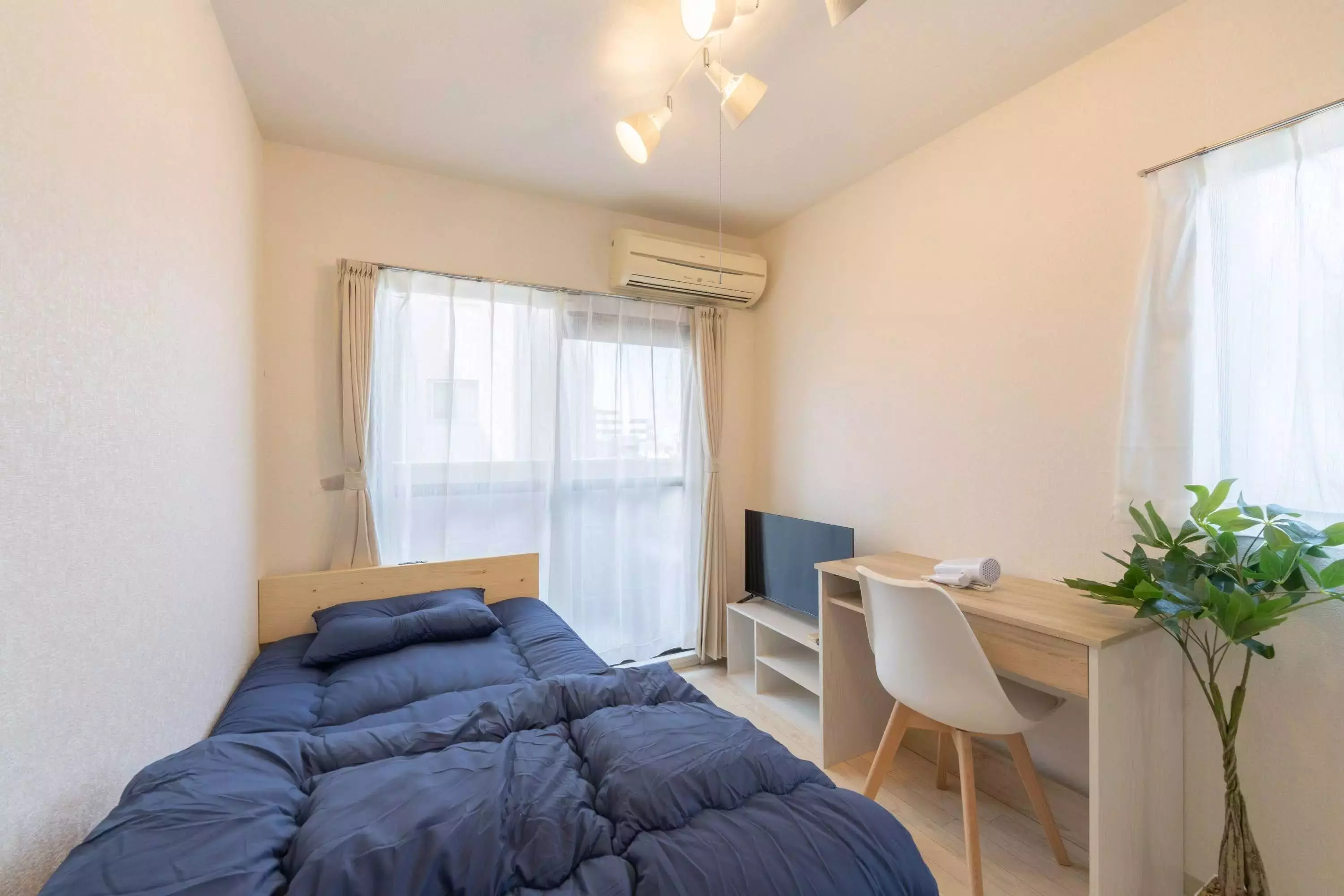
Essential items include a refrigerator, washing machine, microwave, curtains, bed, and table. To save money, you can choose a property that comes furnished with appliances, or utilize second-hand shops and flea market apps.
Average rent for new graduates living alone and differences by area
When you start living alone as a new graduate, the biggest expense is rent. Rent varies greatly depending on the region, with a significant difference between urban and rural areas. Knowing a reasonable rent amount relative to your income will help you live comfortably. Here, we will explain in detail the differences in rent between urban and rural areas, and the appropriate proportion of rent to your income.
Comparison of urban and rural areas
There is a significant difference in rent prices between urban and rural areas, with rents in central Tokyo being considerably higher than the national average.
Average rent in major cities (for studio apartments/1K apartments)
| region | Average rent (yen/month) |
| Tokyo's 23 wards (central area) | 80,000 to 120,000 |
| Tokyo's 23 wards (suburbs) | 60,000 to 80,000 |
| Osaka city | 50,000 to 80,000 |
| Nagoya city | 45,000 to 70,000 |
| Fukuoka City | 45,000 to 70,000 |
| Sapporo city | 35,000 to 55,000 |
| Regional cities (population less than 100,000) | 30,000 to 50,000 |
In urban areas, properties near train stations or in popular areas tend to be expensive.
In urban areas, properties near train stations or in popular areas tend to be expensive, but in rural areas, you can choose a larger room or a property with better amenities for the same price. For example, in Tokyo's 23 wards, if you look for a place for 60,000 to 70,000 yen, you'll often find older studio apartments or properties far from train stations, but in regional cities, you can choose a larger room such as a 1DK or 1LDK for the same price.
Furthermore, the availability of public transportation also affects rent. In urban areas, there are many trains and buses, so properties near train stations are popular. However, in rural areas, where car travel is the norm, it is often possible to find cheaper housing even if it is a little further from the station.
Rent guideline
For recent graduates living alone, rent accounts for a large portion of their overall living expenses, so it's important to know what a reasonable rent should be.
Appropriate ratio of rent to take-home pay
Generally, it's considered ideal to pay rent that is less than one-third of your take-home pay. Let's look at some specific guidelines.
| Net monthly income (yen) | Recommended maximum rent (yen) |
| 180,000 yen | Under 60,000 yen |
| 200,000 yen | Under 66,000 yen |
| 220,000 yen | Under 73,000 yen |
| 250,000 yen | Under 83,000 yen |
For example, the average take-home pay for a new graduate is said to be around 180,000 to 220,000 yen. In this case, the appropriate range for rent would be around 60,000 to 73,000 yen. However, depending on the area you live in and your lifestyle, it may be acceptable to spend more than this percentage.
What happens if the rent is too high?
If your rent exceeds one-third of your take-home pay, your living expenses will become a heavy burden, potentially reducing the amount you have left for savings or entertainment. In particular, you should consider the following expenses:
- Utilities (electricity, gas, water) (5,000-10,000 yen/month)
- Communication costs (smartphone/Wi-Fi) (5,000-8,000 yen/month)
- Food expenses (20,000-30,000 yen/month)
- Transportation expenses (5,000 to 15,000 yen/month)
- Miscellaneous expenses and entertainment expenses (10,000 to 30,000 yen/month)
If rent is too high, you may not be able to allocate enough money to other expenses, which could make your monthly life difficult. Therefore, it is important to set your rent at a rate of about one-third of your take-home pay, while also considering the balance with other living expenses.
Search for a room
Only furnished properties with appliances are listed!
Tips for reducing initial expenses when living alone as a new graduate
When starting to live alone as a new graduate, the average initial cost is said to be equivalent to 4 to 6 months' rent. However, it is possible to significantly reduce costs with some ingenuity. Here, we will explain in detail how to choose properties with no security deposit or key money, how to save on brokerage fees, how to reduce furniture and appliance costs, and how to reduce moving expenses.

Choose a property with no security deposit or key money.
<Advantages and disadvantages of zero-deposit properties>
A "zero-zero property" refers to a rental property where both the security deposit and key money are free. Choosing such a property can significantly reduce initial costs.
merit
- You can save tens of thousands to hundreds of thousands of yen on initial costs (if your rent is 60,000 yen, you can save about 120,000 yen).
- The burden of payment at the time of contract will be lighter.
- It's less likely to result in losses even with short-term stays.
Disadvantages
- Rents are often set higher than the market rate.
- Cleaning and repair costs can be substantial when you move out.
- Joining a guarantee company is often mandatory, and a guarantee fee is usually required.
<Points to note when signing a contract>
- Check the costs incurred upon moving out in advance (check the "Restoration Costs" section in the contract).
- Check if the rent is higher than the market rate (compared to the average rent in the surrounding area).
- Understand the difference between zero-zero properties and free rent (zero initial costs, while free rent properties offer free rent for a certain period).
How to reduce brokerage fees
<Average brokerage fee>
The brokerage fee is usually equivalent to 0.5 to 1 month's rent. However, the legal limit is set at 1 month's rent, and charging more than that is illegal.
<Tips for Negotiation>
- "I found another company offering it for half the price," they say (because it's a highly competitive industry, negotiation is often possible).
- Ask, "Are there any properties where the landlord covers the brokerage fee?" (In some cases, the landlord will cover the brokerage fee depending on the property.)
- Tell them you are considering multiple properties as potential purchases (this makes price negotiations easier by allowing you to compare them with competing properties).
<How to find a real estate company that offers no brokerage fees>
- Search for "No brokerage fee in [desired area]"
- Look for properties with "direct contracts with the landlord" (no brokerage fees if you don't go through a real estate company).
- Check out discount campaigns for service fees on portal sites such as "SUUMO" and "HOME'S".
Tips for saving money on furniture and home appliances
<A list of essential items>
When starting a new life, buying everything new can easily cost over 100,000 yen. First, let's make a list of the absolute essentials.
<Minimum required items>
- Refrigerator (essential for food storage)
- Washing machine (considering the cost of using a coin laundry, it's more economical in the long run)
- Microwave oven (convenient if you cook at home)
- Curtains (for privacy and protection against the cold)
- Lighting (may not be provided in some properties)
<Things you don't need to rush>
- Sofa (will be put off for later due to space constraints)
- Television (can be substituted with a smartphone or PC)
- Rice cooker (microwave cooking is also OK)
<Utilizing recycling shops and flea market apps>
- Mercari and Jimoty: You can purchase items at low prices because you can trade directly with people in your local area.
- Recycle shops (Treasure Factory, Hard Off, etc.): Items can be purchased for less than half the price of new items.
- Hand-me-downs from friends and family: Check if your parents or acquaintances have any unwanted home appliances.
Tips for reducing moving expenses
<Avoid peak season>
Moving prices are 1.5 to 2 times higher during the peak season (March to April), so choosing a date after May or a weekday will help keep costs down. Also, morning moves are popular, so afternoon moves are often cheaper.
<Use a single-person moving package>
If you have only a few belongings, you can significantly reduce costs by using a "single-person moving package" offered by a major moving company. These packages are typically ¥15,000 to ¥40,000 cheaper than regular moving plans and offer comprehensive nationwide service. Compare the pricing plans of different companies and choose the one that best suits your needs.
<Consider moving on your own>
For short-distance moves with few belongings, you can rent a car and transport your items yourself. Even including rental and gas costs, this is often cheaper than hiring a moving company. However, if you have large furniture or appliances, it's a good idea to consider hiring a professional moving company to minimize the risk of damage and reduce the burden of moving them yourself.
Other ways to save money on living alone as a new graduate, besides initial expenses.
When you start living alone right after graduating from university, monthly living expenses can be a significant burden. However, with a little ingenuity, it's possible to reduce fixed costs and daily expenses and increase your savings without difficulty. This article will explain in detail how to save money on living expenses in general, how to reduce fixed costs, how to save money on food, and tips for making the most of reward points.
Ways to save on living expenses
When living alone, expenses beyond rent include food, utilities, communication costs, transportation, and entertainment. Reducing these expenses can lighten your monthly financial burden.
Saving on utility bills
- Electricity costs: Switch to LED light bulbs and minimize air conditioner use.
- Gas bill: Choose a property with city gas to shorten shower time.
- Water bill: I mainly use the shower for baths and do laundry in batches.
Saving on communication costs
- Switch to a low-cost SIM plan (you can save over 3,000 yen per month compared to major carriers).
- Compare pocket Wi-Fi and fiber optic internet plans to choose the cheapest one.
Saving on transportation costs
- I use my commuter pass and travel within the limits covered by my company.
- Use shared bicycles or electric scooters (to save money on short-distance travel).
Saving on entertainment expenses
- Review your subscriptions (cancel video and music services you don't use).
- Take advantage of free events and promotions.
Ways to reduce monthly fixed expenses
Since fixed expenses are incurred every month, reviewing them first can lead to significant savings.
1. Switch your smartphone plan to a low-cost SIM.
- Switching from a major carrier to a low-cost SIM provider (such as UQ Mobile, Rakuten Mobile, or IIJmio) can save you over 5,000 yen per month.
2. Compare electricity and gas companies and choose the cheapest plan.
- By using the liberalized plans offered by new electricity and gas companies, you can save 10,000 to 20,000 yen per year.
- You can sometimes save even more by using a bundled discount (electricity + gas).
3. Consider the burden of resident tax and health insurance.
- Since resident tax is incurred from the second year onwards, it's a good idea to save money in the first year.
- By utilizing the Furusato Nozei (hometown tax donation) system, you can reduce your tax burden.
4. Ways to lower rent
- Considering shared housing or room sharing can significantly reduce your monthly rent.
- I'll take advantage of my company's housing allowance program and choose a property that provides rent subsidies.
Tips for saving money on food
Food expenses are one of the most variable expenses for someone living alone. The key is to reduce eating out and efficiently control food costs.
1. Set a budget on a weekly basis.
- Setting specific goals, such as "spend no more than 30,000 yen per month" or "spend no more than 1,000 yen per day," can help prevent wasteful spending.
2. Make cooking your own meals the norm.
- By buying groceries in bulk and preparing meals in advance, you can reduce the number of times you eat out and even keep the cost of a meal under 300 yen.
- I use wholesale supermarkets and discount stores to choose inexpensive ingredients.
3. When eating out, make use of coupons and set meals.
- I use discount coupons and lunch set menus at chain restaurants to choose cost-effective options.
- I prefer dining in rather than taking out (because some restaurants charge extra for takeout).
4. Limit your intake of drinks and snacks.
- Buying drinks at convenience stores or vending machines is expensive.
- Carrying a water bottle and buying 2L bottles of water or tea at the supermarket can save you a significant amount of money.
Reduce living costs by using points
By using points for your daily payments, you can save money and shop more affordably.
1. Utilize cashless payment methods.
- Earn points by paying with a credit card or QR code payment (Rakuten Pay, PayPay, d払い).
- By consolidating your monthly payments into cashless transactions, you can save tens of thousands of yen per year.
2. Choose a credit card that makes it easy to accumulate points.
- Rakuten Card: Earn up to 5 times the points when shopping at Rakuten Market.
- d Card: Easily accumulate d points at convenience stores and restaurants.
- Mitsui Sumitomo Card (NL): Earn up to 5% cashback at three convenience store chains and McDonald's.
3. Earn points using a smartphone app.
- Utilize apps like "Rakuten Check" and "Torima" that allow you to earn points just by walking.
- I also use point cards from supermarkets and drugstores (such as T-points and Ponta).
4. Subsidize living expenses by paying with points.
- By using accumulated points for "food expenses, utility bills, and communication expenses," you can effectively reduce your living expenses.
- By utilizing the "hometown tax donation" system, you can obtain rice and other food items using points.
Search for a room
Only furnished properties with appliances are listed!
If you're a recent graduate looking to keep initial living expenses down, a shared house is also a good option.
When starting to live alone after graduating from university, the initial costs of renting an apartment (security deposit, key money, brokerage fees, etc.) and the burden of rent can be a major challenge. One solution to this is to use a shared house. In particular, compared to renting an apartment in the city center, a shared house can significantly reduce initial costs, monthly rent, and living expenses, allowing you to start your new life more economically.
Advantages of a shared house
① Significantly reduce initial costs
In a typical rental agreement, it's common to have to pay a security deposit, key money, brokerage fees, and guarantee company fees, which can amount to 4 to 6 months' rent. On the other hand, many share houses have no security deposit or key money, and sometimes a guarantee company is not required, minimizing initial costs.
② Low rent and good value for money
Share house rents are often 20-50% cheaper than regular rentals, and many properties in urban areas can be found for around 40,000-70,000 yen per month. Furthermore, many properties include utilities and Wi-Fi in the rent, helping to keep monthly fixed expenses down.
③ Furnished with furniture and appliances, ready to move in immediately.
In a typical rental property, you would need to purchase items such as a refrigerator, washing machine, bed, table, and microwave, but in a share house, you can use the provided furniture and appliances, thus reducing additional expenses. Since you'll have less to move, you can start your new life smoothly.
④ Interacting with others reduces feelings of loneliness.
Living alone as a new graduate can often feel lonely in an unfamiliar environment, but in a share house, you can naturally interact with people in similar situations, creating an environment where you can easily discuss life problems and work-related issues. Furthermore, share houses with many foreign residents offer opportunities for cross-cultural exchange and improvement of English skills.
⑤ The contract is simple, and you can stay there even for a short period.
While two-year leases are common for rental properties, many share houses offer short-term contracts starting from one month, providing the advantage of being able to move easily. The flexibility to move in case of job changes or transfers is also an attractive feature.
If you'd like to learn more about the advantages and disadvantages of living in a shared house, please also check out this article.
Key points to consider when choosing a share house
When choosing a shared house, check the following points:
- Location and Access: Check the distance from your workplace or the nearest station.
- Rent and common area fees: Are utilities (water, electricity, gas) and Wi-Fi included?
- Facilities and amenities: Presence or absence of furniture and appliances, and the condition of common areas.
- Atmosphere of the residents: Check the atmosphere of the residents by viewing the property in advance.
- Contract terms: Check the minimum contract period and whether a security deposit is required.
Cross House Share House
Cross House is a company that provides shared housing with low initial costs, mainly in Tokyo. They have many properties that cater to recent graduates and young professionals, and their affordable prices are a key feature.
The appeal of Cross House
- No security deposit, key money, or brokerage fees: No high initial costs like those for renting, and you can move in immediately.
- The apartment comes furnished with furniture and appliances, including everything you need for daily life: refrigerator, washing machine, microwave, bed, etc.
- Rent is among the cheapest in Tokyo (some properties available from as low as 30,000 yen per month): It's significantly cheaper than renting, allowing you to live while saving money.
- A flat-rate plan that includes utilities (water, electricity, gas) and Wi-Fi: Makes it easier to manage monthly expenses and prevents unexpected spending.
- With over 1000 properties available, you can live in your desired area: We offer properties in a wide range of areas, mainly in Tokyo's 23 wards.
- Short-term contracts are also available (minimum 1 month): We can flexibly accommodate situations where you need to move due to work.
Cross House's representative share house area
- Shinjuku, Shibuya, and Ikebukuro areas: Excellent access to the city center.
- Nakano, Koenji, and Sangenjaya area: Affordable rent and a comfortable place to live.
- Ueno/Akihabara area: Offers high convenience and many cost-effective properties.
summary
When starting to live alone as a new graduate, managing initial costs and living expenses is crucial. Understanding the breakdown of initial costs and negotiating for properties with no security deposit or key money, or lowering brokerage fees, can help reduce expenses. Furthermore, keeping monthly rent within one-third of your take-home pay and reviewing fixed expenses will allow you to live a stable life. Additionally, considering a shared house is a good option, as it allows you to live at a low cost even in the city center while minimizing initial costs. Start your new life comfortably while saving wisely!