
What is the standard of living for a single person with a net income of 170,000 yen?
Living alone on a net income of 170,000 yen is certainly possible, but it won't necessarily mean having a comfortable lifestyle. You need to carefully control your rent and fixed expenses, and manage your daily spending. Rent, food, and communication costs, in particular, make up a large portion of your expenses, so where and how you live will greatly affect your quality of life.
A net income of 170,000 yen is a rough estimate of gross annual income.
A monthly take-home pay of 170,000 yen is the amount after deducting social insurance and taxes. Looking at the gross salary (total pay), it's around 220,000 yen, and on an annual basis, it's roughly 2.6 million to 2.7 million yen. If your workplace includes bonuses, your annual income will be even higher, but if not, you need to carefully control your monthly expenses. Reviewing your allocation to rent and food expenses, in particular, will help you create a more realistic financial plan.
Is a net income of 170,000 yen considered a high or low standard of living?
A net income of 170,000 yen is average to slightly below average for people in their 20s and early 30s. According to a survey by the Ministry of Health, Labour and Welfare, the average net income is around 180,000 to 220,000 yen. While 170,000 yen is not particularly low, it is a level where it is difficult to have money left over for savings or hobbies. However, if you can keep fixed costs down and manage your spending well, it is certainly possible to live a fulfilling life.
How different are life's lifestyles in Tokyo compared to those in rural areas?
There is a significant difference in living costs, especially rent, between Tokyo and rural areas. In central Tokyo, even a studio apartment typically costs between 60,000 and 80,000 yen, making housing a heavy burden on someone with a net income of 170,000 yen. On the other hand, in rural areas, rent can be kept down to around 30,000 to 50,000 yen, and utilities and food costs are also lower, making it easier to live comfortably on the same income. Moving to a rural area or choosing a property in the suburbs are effective options for improving your quality of life.
What's a realistic rent budget? [Guidelines and Examples]
For someone living alone on a net income of 170,000 yen, setting the right rent is a crucial factor that affects the stability and comfort of their life. Generally, it is said that "rent should be one-third of your net income (approximately 56,000 yen)," but the appropriate amount varies depending on the region and lifestyle. Recently, due to rising prices and soaring rents in urban areas, there are increasing cases where living expenses are difficult even with the one-third rule. At the end of this chapter, we will provide a detailed simulation showing how life changes at rent levels of 40,000 yen, 50,000 yen, 60,000 yen, and 70,000 yen.
Is it true that "rent should be one-third of your take-home pay"?
The guideline that "rent should be one-third of your take-home pay" is a basic guideline based on the premise of a manageable allocation of living expenses. For example, if your take-home pay is 170,000 yen, the ideal rent would be around 56,000 yen, but in reality, rent prices in urban areas are high, and it can be difficult to keep it within one-third in some areas. Also, recently, due to factors such as rising prices separate from rent, there are increasing cases where people struggle to make ends meet even with rent within one-third. Furthermore, this does not apply if there is a rent subsidy or company housing system, in which case it may be possible to live comfortably even with higher rent because the actual burden is reduced.
Is it tough to pay 60,000 yen in rent on a net income of 170,000 yen?
With a net income of 170,000 yen and rent of 60,000 yen, this accounts for 35% of your total living expenses, requiring very careful budgeting. The remaining 110,000 yen must cover fixed and variable expenses such as food, utilities, and communication costs, making it difficult to save money or cope with unexpected expenses, which can easily lead to financial insecurity. If you cannot compromise on rent due to reasons such as security or convenient commuting, you will need to find ways to cut other expenses, such as using a cheap SIM card or cooking at home as much as possible.
If you absolutely must prioritize living environment and security, and your rent ends up being 60,000 yen, it's important to balance this by reviewing your communication expenses and focusing on cooking at home.
Living simulation by rent (40,000/50,000/60,000/70,000)
If the rent is 40,000 yen
- Food expenses: 25,000 yen
- Utilities: 10,000 yen
- Communication expenses: 8,000 yen
- Other: 25,000 yen (daily necessities, transportation, entertainment expenses)
- Savings: 30,000 yen
By being frugal, it's possible to save around 30,000 yen per month, and there's a certain degree of financial leeway in life.
If the rent is 50,000 yen
- Food expenses: 25,000 yen
- Utilities: 10,000 yen
- Communication expenses: 8,000 yen
- Other: 20,000 yen
- Savings: 17,000 yen
This is a budget-friendly option that allows you to balance saving money with entertainment. In rural areas or suburbs, there are more choices and it's easier to live comfortably.
If the rent is 60,000 yen
- Food expenses: 20,000 yen
- Utilities: 10,000 yen
- Communication expenses: 7,000 yen
- Other: 18,000 yen
- Savings: 5,000 to 10,000 yen
Saving money is essential, and reviewing fixed expenses is crucial, so savings and discretionary spending are limited.
If the rent is 70,000 yen
- Food expenses: 18,000 yen
- Utility costs: 8,000 yen
- Communication expenses: 7,000 yen
- Other: 15,000 yen
- Savings: Almost impossible or in the red
This is a very unrealistic financial plan. Without bonuses or supplementary income, you'll be in a very difficult situation.
Search for a room
Only furnished properties with appliances are listed!
Breakdown of living expenses and practical money management techniques
To continue living alone on a net income of 170,000 yen, it's essential to understand the breakdown of your living expenses and manage them systematically. Classify your expenses into "fixed costs (rent, utilities, communication costs, etc.)" and "variable costs (food, daily necessities, entertainment, etc.)," and set a reasonable budget for each. Using a household budget app or Excel to make expense management a habit is also effective. Furthermore, by incorporating easy-to-maintain saving techniques such as cooking at home, using a low-cost SIM card, and finding ways to reduce electricity costs, you can achieve a comfortable lifestyle even with a low net income.
How can I reduce fixed costs (rent, utilities, communication expenses)?
Fixed expenses are recurring monthly costs, and reviewing them can have a significant impact. Keep the following points in mind.
rent
- The basic rule is to keep it within one-third of your take-home pay (approximately 55,000 yen).
- Even if the building is old, it's not a problem as long as the facilities are in order.
- By narrowing down your search criteria, such as "within a 15-minute walk from the station" or "with city gas," you can sometimes find properties that offer good value for money.
Utility costs (water, gas, electricity)
- A guideline is 8,000 to 12,000 yen per month.
- Note that electricity costs tend to be higher during the daytime in all-electric properties.
- By finding ways to reduce usage, it's possible to save tens of thousands of yen per year.
Communication costs (smartphone and internet)
- A budget SIM card plus Wi-Fi is the best value combination.
- I keep my smartphone bill under 3,000 yen per month, and I also use promotion campaign to keep my internet connection costs down.
How do you manage variable expenses (food, daily necessities, entertainment expenses)?
Variable costs can vary significantly depending on how they are used at any given time, requiring strong control to eliminate waste.
Food expenses
- Estimated cost: 20,000 to 25,000 yen per month
- If you eat out or go to convenience stores frequently, your monthly bill can easily exceed 50,000 yen.
- Buying in bulk and cooking at home can lead to significant savings.
Daily necessities/consumables
- Estimated cost: 3,000 to 5,000 yen per month
- Take advantage of drugstore sale days and private label (PB) products.
Entertainment expenses and hobbies
- Estimated cost: 5,000 to 10,000 yen per month
- When attending drinking parties or events, set a budget in advance.
- If entertainment expenses are high, try substituting them with "drinking at home" or "Free spots."
Money-saving tips: Cooking at home, cheap SIM cards, and techniques for saving on utility bills.
Here are some money-saving tips that you can easily stick with for as long as possible.
self catering
- For one person, you can get a nutritionally balanced meal for 200 to 300 yen per meal.
- Making meals in advance and freezing them can be cheaper and save time compared to eating out.
transfers to a low-cost SIM
- Monthly communication costs of 7,000 to 10,000 yen can be reduced to less than 3,000 yen.
- If you're not attached to a major carrier, transfers can lower your fixed costs.
Techniques to reduce utility bills
- The ideal air conditioner temperature setting is 28°C in summer and 20°C in winter.
- We've installed outlets with switches to allow for frequent power off and reduce standby power consumption.
- Shortening shower times and reusing leftover bathwater for laundry are also effective methods.
A firsthand account from someone living alone on a net income of 170,000 yen.
People living alone on a net income of 170,000 yen are constantly finding ways to manage their limited budget. While they have gained freedom by leaving their parents' home, they often face the reality that fixed costs such as rent, utilities, and communication fees weigh heavily on them, making it difficult to save money or spend on entertainment. Many are surprised by the high registration fee and unexpected expenses, and many are currently getting by with simple saving techniques such as cooking at home, using cheap SIM cards, and taking advantage of sales. Nevertheless, there are also positive voices saying that "living independently gives you confidence." Here, we will introduce some detailed personal experiences.

The realities I faced when moving out of my parents' house to living alone
When you leave home and start living alone for the first time, you're hit with the reality of money at the same time as you experience freedom.
- The first thing that surprises you is the high registration fee. Many people say that nearly 300,000 yen disappeared in one go just for the security deposit, key money, moving expenses, and furniture and appliances.
- Since starting to live alone, many people have faced the reality of fixed expenses like utilities, internet, and smartphone bills that are incurred every month. Because their disposable income is limited, some people have found themselves eating out with friends less often or having to cut back on hobbies and shopping.
- On the other hand, there are also positive voices saying that "the feeling of being able to manage one's own life has boosted one's confidence," and many people are overcoming the challenges through clever ways of saving money.
How difficult is it to live on a net income of 170,000 yen plus owning a car?
Owning a car often incurs fixed and variable costs of around 15,000 to 30,000 yen per month, which is about 20% of a net income of 170,000 yen. These are some of the comments that have actually been made.
- "I couldn't commute without a car, so I had no choice but to keep my rent low."
- "If you own a car, you need to be prepared to cut back considerably on other expenses."
- "I can't give up my car because it's my hobby, but that means I live without spending any money on socializing."
Search for a room
Only furnished properties with appliances are listed!
How to reduce rent costs for a single person with a net income of 170,000 yen
If you're living alone on a net income of 170,000 yen, minimizing rental costs is crucial for financial stability. Choosing older properties or those slightly further from train stations often results in lower rent, and selecting properties with no security deposit or key money can significantly reduce registration fee. Utilizing real estate websites with Free brokerage fees is also an effective strategy. To reduce monthly burdens and achieve a more comfortable lifestyle, reviewing both rent and registration fee is key.
Choose a property that is older.
Older properties often have rents that are several thousand to ten thousand yen Affordable, even in the same area.
- Even properties that are 30 years old are increasingly being fully renovated and have beautiful interiors, making them a good target.
- Many properties offer basic amenities such as a separate bathroom and toilet, and air conditioning.
While keeping the above points in mind, it's important to check the actual condition, maintenance status, and facilities rather than just the age of the building.
Choose a property with no security deposit or key money.
The biggest advantage of properties with no security deposit or key money is that you can save over 100,000 yen on registration fee.
- Lower registration fee allow you to allocate funds to purchasing home appliances and setting up your living expenses.
- "Zero-cost properties" may have higher cleaning fees upon moving out, so be sure to check before signing the contract.
- Since the rent may be set a little high in some cases, it is important to compare the total monthly cost.
Choose the next station where express or rapid trains stop.
While rents tend to be higher around popular train stations, you can sometimes find them 10,000 to 20,000 yen cheaper by just moving to the next station over.
- Commuting time will remain almost unchanged.
- Instead of targeting stations where only local trains stop, aim for the next station where express trains stop as well.
- Expanding your search beyond just being close to the station to include a 10-15 minute walk tends to result in even lower rent.
How to choose an area and property where you can live on a net income of 170,000 yen
To comfortably live alone on a net income of 170,000 yen, it's crucial to choose an area with affordable rent and a good balance of access and living environment. Instead of focusing solely on central Tokyo, consider suburbs like Saitama, Chiba, and Kanagawa; you can find properties for 40,000 to 50,000 yen. Compare commute time, safety, and essential infrastructure comprehensively to achieve a cost-effective and manageable lifestyle. Checking recommended train lines and area characteristics is also key.
How to find areas with Affordable rent
To compare rental prices, it's convenient to use the "area-specific rental price page" or "rent price map" on real estate portal sites.
- List and consider stations within a 30-60 minute train ride from the city center.
- Prioritize checking areas where the average rent for a "studio apartment or 1K" is 50,000 yen or less.
- Properties that are 20 years old or older, more than a 10-minute walk from the station, and close to a station but not an express train stop are good targets.
In addition to convenience for commuting to work or school, it might be a good idea to also check the availability of essential infrastructure.
Advantages and disadvantages of living in the suburbs over the city center
Because rents are inevitably high in the city center, more and more people are choosing to live in the suburbs. This is an effective way to reduce rent costs. This article explains the advantages and disadvantages of living in the suburbs rather than the city center.
merit
- Rent is about 10,000 to 30,000 yen cheaper compared to the city center.
- Even with the same budget, you can find properties with larger floor plans and better amenities.
- There are many quiet residential areas, allowing you to live in a peaceful environment.
Disadvantages
- Commuting to work or school takes a long time (sometimes more than an hour each way)
- The last train may be early / Transportation costs may be high
- There are fewer restaurants and entertainment facilities, so people tend to go to the city center more often.
Recommended areas and train lines
The areas and train lines we will introduce are examples of popular areas that offer easy access to the city center and lower rents. We will introduce several properties in each area.
Saitama Prefecture
- Nishikawaguchi, Warabi, Minami-Urawa (Keihin-Tohoku Line)
Within 30 minutes of the city center. There are also properties near the station available for around 50,000 yen.
- Soka, Yatsuka, Yashio (Tobu Skytree Line, Tsukuba Express)
The average rent is 40,000 to 50,000 yen. The living environment is also good due to redevelopment.
Chiba Prefecture
- Ichikawa, Moto Yawata(Sobu Line)
Conveniently located near central Tokyo with good access. It's a popular area, but there are also properties available for under 50,000 yen.
- Funabashi, Tsudanuma(Sobu Line/ Keisei Main Line)
There are large commercial facilities nearby. The balance between convenience and rent is good.
Kanagawa Prefecture
- Tsurumi, Higashi Kanagawa(Keihin-Tohoku Line, Tokyu Toyoko Line)
A location that allows you to target both Yokohama and Tokyo.
- Sagami-Ono, Hon-Atsugi (Odakyu Line)
Affordable rent, popular with students and working professionals.
Search for a room
Only furnished properties with appliances are listed!
[Subsidies available] Support programs that can be used even with a low income.
Even with a net income of 170,000 yen, utilizing various support systems is key to easing the burden of living alone. There are many systems available if you meet the conditions, such as housing allowances, rent subsidies, and housing security benefits from local governments. There are also support measures for single-parent households and young people, and the application procedures are relatively simple. First, check the website of your local government and find a system that suits you and make good use of it.
Possibility of housing allowance/rent subsidy
Some companies provide housing allowances or rent subsidies to both full-time and contract employees. While eligibility requirements vary from company to company, check the following points:
Points to check
- How much will be subsidized per month (maximum amount)?
- Is the work location limited? (e.g., only applicable to employees who are transferred to a different location)
- Application requirements (contract period, whether or not you have dependents, commuting time, etc.)
Some companies offer subsidies covering 20-30% of rent, with a maximum of around 20,000 yen. Be sure to carefully check the job posting and company regulations.
Local government rent subsidy and support programs
Some local governments also have systems in place that provide rent subsidies if certain conditions are met. The following are some of the most common types of support:
Main examples
- For young people and new graduates: Rent subsidy for those living alone (income restrictions apply)
- For single-parent households: Many municipalities offer rent subsidies. These can be used in conjunction with child allowance.
- Housing Security Benefit: Temporary rent assistance for people whose income has drastically decreased.
You can find information about eligibility ages, conditions, and application procedures by searching for terms like "rent subsidy" or "housing support" on each local government's website.
Let's consider a shared house.
Starting to live alone in Tokyo on a net income of 170,000 yen might seem like a significant financial hurdle. However, for those who want to live in the city center while keeping rent down, a share house is a realistic and cost-effective option. One share house management company that is attracting particular attention is "XROSS HOUSE." Let's take a look at why it's perfect for those starting out living alone in Tokyo.
Advantages of choosing XROSS HOUSE
- Affordable initial cost: No With Zero deposit / key money / brokerage fee; registration fee are a flat rate of Flat rate 30,000 yen.
- Incredibly Affordable rent: You can live in Tokyo for as little as ¥24,800 per month (even including common service fee, it's around ¥40,000).
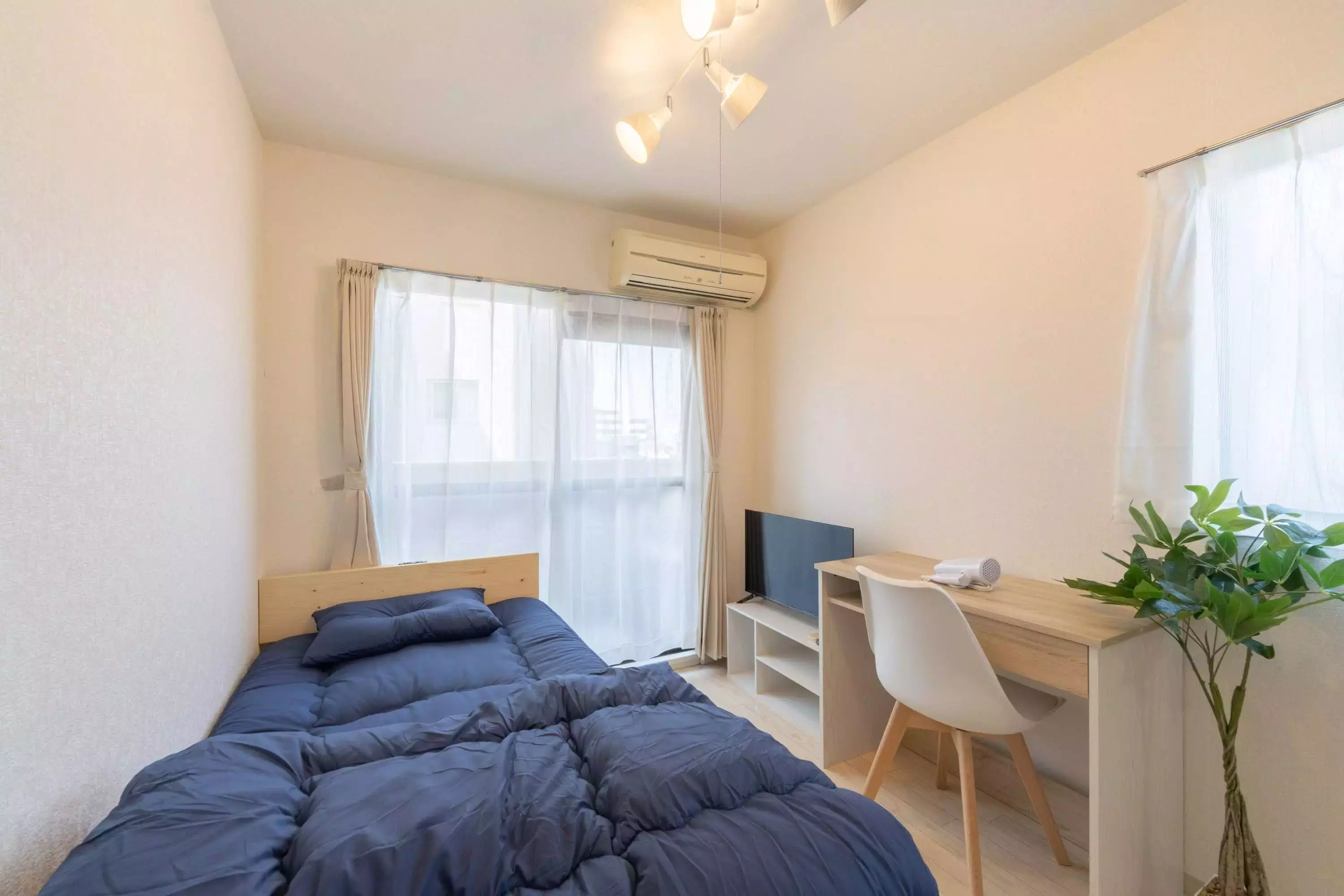
- Fully furnished with furniture, appliances, and Wi-Fi: Bed, refrigerator, desk, TV, washing machine, cooking utensils, etc., ready to move in immediately.
- Plenty of properties in prime locations near train stations: Many properties are located within a 20-minute radius of major central Tokyo stations such as Shibuya, Shinjuku, and Ikebukuro.
- No need to visit a store to sign a contract: You can WEB contract from your smartphone or PC, making it smooth even when moving from a distance.
- Free Moving between properties after moving in: You can Moving between properties as many times as you need, even if your commute or school location changes, giving you peace of mind.
- common service fee include utilities and consumables: Monthly payments are simple and expense management is easy.
All necessary amenities are provided: showers, kitchens, toilets, washing machines, and all other supplies are available in the common areas.
summary
This article discussed living alone on a net income of 170,000 yen. Living alone on a net income of 170,000 yen is by no means easy, but it is certainly possible if you are creative with your rent setting and expense management. In particular, rent should be no more than one-third of your net income (approximately 56,000 yen), so you need to be creative in keeping expenses down. Effective ways to save money include reducing rent costs, cooking at home, using a cheap SIM card, and reviewing your electricity bill. Also, by utilizing housing allowances and rent subsidies from companies and local governments, and options such as shared housing, it may be possible to live comfortably even in the city center. Ingenuity and information gathering are key.