Is it really possible to live alone on a net income of 140,000 yen?
Living alone on a net income of 140,000 yen is "possible," depending on the region and lifestyle. However, it will require considerable saving and resourcefulness.
In urban areas in particular, rents are high, making it difficult to make ends meet without controlling expenses. However, in rural areas or suburbs, rents can be lower, making a more comfortable lifestyle possible.
The important thing is to accurately understand your income and expenses, reduce waste, and minimize living costs. By reviewing your expenses such as rent, food, utilities, and communication costs, you can maintain a good quality of life. In the next chapter, let's take a closer look at an income of "140,000 yen after taxes."
What does a net income of 140,000 yen mean? (Explanation of the difference from gross income)
"A net income of 140,000 yen" refers to the amount you actually receive after deducting taxes, social insurance contributions, and other deductions.
For example, even if your monthly gross income is 170,000 to 180,000 yen, after deductions for health insurance, employee pension, employment insurance, and resident tax, it's common to end up with only 140,000 yen. This is especially true for recent graduates and those in non-regular employment, and in some regions, many people start their lives on this amount. It's important not to mistakenly assume that "take-home pay" equals "the amount you can freely spend."
By accurately understanding your income, you can manage your household finances and choose properties with a more realistic perspective.
Monthly expenses necessary for a single person living on a net income of 140,000 yen
If you're living alone on a net income of 140,000 yen, balancing your expenses is crucial.
First, rent should make up a large portion of your expenses, ideally less than one-third of your income, or around 40,000 to 45,000 yen. Next, food costs about 20,000 to 30,000 yen, utilities around 10,000 yen, communication costs 5,000 to 10,000 yen, and it's reassuring to budget around 10,000 yen per month for daily necessities and transportation. Also, it's a good idea to set aside 5,000 to 10,000 yen each month to save a small amount for unexpected expenses.
Understanding these major expense items and their estimated values makes it easier to plan your finances. In the next chapter, we will introduce a detailed living expense simulation based on rent.
What's the ideal rent to pay? Places and conditions where you can live for 40,000 or 50,000 yen.
If you're living alone on a net income of 140,000 yen, the general guideline is that rent should be "less than one-third of your income." In other words, an ideal rent would be in the 40,000 yen range, and a realistic upper limit would be around 50,000 yen. Keeping rent down is directly linked to financial stability, so careful consideration is needed when choosing an area and property.
For example, even in urban areas, you can find rooms in the 40,000 yen range if you look at properties located far from train stations or older buildings. Furthermore, looking at rural or suburban areas expands your options for finding properties with better conditions. Conversely, if you choose a property costing over 50,000 yen, you should be aware that you will need to significantly cut back on other expenses.
Next, let's look at the types of rooms available and the actual living conditions in each rent range.
Areas and properties where you can live for around 40,000 yen in rent
Properties with rent in the 40,000 yen range can be found in many suburban areas of cities and in regional cities.
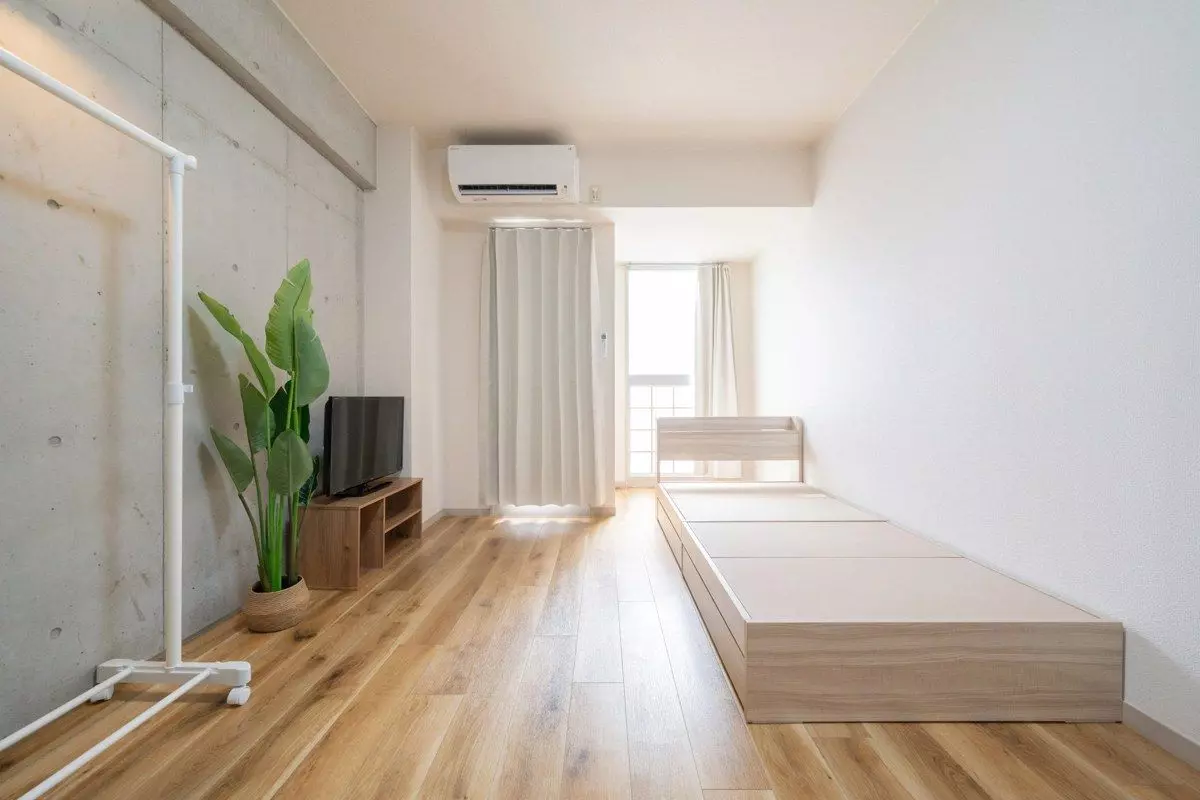
Even in major metropolitan areas like Tokyo and Osaka, you can sometimes find properties for around 40,000 yen a month if you choose locations more than 15 minutes' walk from the station or properties that are 20 years old or older. While properties in this price range may not always have separate bathrooms and toilets (e.g., 1K or studio apartments), you might find renovated properties or hidden gems with excellent amenities.
Furthermore, choosing a property with no security deposit or key money can reduce initial costs, and if it uses city gas, it can also lead to savings on utility bills. If saving money is your priority, this price range is arguably the most balanced option.
How difficult is it to live on a rent of around 50,000 yen?
When rent reaches over 50,000 yen, it accounts for more than 35% of a net income of 140,000 yen, putting a significant strain on one's overall lifestyle.
With the remaining 90,000 yen, you need to cover all expenses, including food, utilities, communication, daily necessities, transportation, and entertainment, which requires very strict household budgeting.
Living in a convenient urban area or prioritizing amenities like separate bathrooms and soundproofing is an attractive option, but it may necessitate drastically cutting back on food expenses or supplementing income with a side job. Especially when considering unexpected expenses or savings, there's very little room for flexibility.
It's important to carefully consider the trade-offs with convenience before making a decision.
Search for a room
Only furnished properties with appliances are listed!
Living expenses simulation based on a net income of 140,000 yen
To live alone on a net income of 140,000 yen, you need to strictly manage your living expenses, including rent. In particular, the amount of money you spend on rent will greatly affect your financial comfort and the risk of going into debt.
Here, we'll divide the living expenses into three categories based on rent: 40,000 yen, 50,000 yen, and 60,000 yen or more, and simulate the feasibility of each.
By determining a rent that suits your lifestyle, you can achieve sustainable independent living without financial strain. Let's start by looking at the most realistic scenario: rent of 40,000 yen.
Breakdown of living expenses when rent is 40,000 yen
If you can keep your rent down to 40,000 yen with a net income of 140,000 yen, you can manage your living expenses with the remaining 100,000 yen, allowing for a relatively stable lifestyle.
Main expenditure guidelines
- Food expenses: 20,000 yen
- Utilities (water, electricity, gas): 10,000 yen
- Communication expenses: 7,000 yen
- Daily necessities and miscellaneous expenses: 10,000 yen
- Transportation expenses: 5,000 yen
- Entertainment expenses: 5,000 yen
With this setup, it's possible to save around 5,000 to 10,000 yen per month. The appeal lies in being able to maintain a certain level of financial comfort while still being mindful of saving, making it a realistic plan, especially for those who can keep rent low in rural or suburban areas. If you develop habits such as cooking at home and avoiding unnecessary spending, you should be able to continue this without difficulty.
Breakdown of living expenses when rent is 50,000 yen
If the rent is 50,000 yen, then out of a net income of 140,000 yen, 90,000 yen will be needed to cover living expenses.
Main expenditure guidelines
- Food expenses: 20,000 yen
- Utilities (water, electricity, gas): 10,000 yen
- Communication expenses: 8,000 yen
- Daily necessities and miscellaneous expenses: 8,000 yen
- Transportation expenses: 5,000 yen
- Entertainment expenses: 3,000 yen
This lifestyle requires a very tight budget. There's little room for saving, and unexpected expenses could easily put you in the red. While you prioritize living environment and convenience, and therefore set higher rents, you must meticulously manage your monthly expenses and possess strong saving skills. Although possible, it's a lifestyle best suited for those with some experience in saving, as there's little room for flexibility.
What happens if the rent is over 60,000 yen? Let's examine the deficit line.
If your rent exceeds 60,000 yen, housing costs will account for approximately 43% of your net income of 140,000 yen, putting a significant strain on your overall lifestyle. You'll then have to live on 80,000 yen.
Main expenditure guidelines
- Food expenses: 20,000 yen
- Utilities (water, electricity, gas): 10,000 yen
- Communication expenses: 8,000 yen
- Daily necessities and miscellaneous expenses: 7,000 yen
- Transportation expenses: 5,000 yen
- Entertainment expenses: 3,000 yen
Even with these assumptions, you'll be living on the edge. Saving money will be difficult, and any unexpected expenses will quickly put you in the red. Furthermore, you won't have the resources to cope with emergencies such as moving or illness, and your psychological stress will increase. Even with the appeal of convenience and newer properties, you should recognize that rent exceeding 60,000 yen is the "red line where continuing to live alone becomes difficult."
What kind of properties are available? Tips for choosing a property
To successfully live alone on a net income of 140,000 yen, the key is to choose a property that allows for comfortable living while keeping rent low. Properties with rent in the 40,000 yen range are particularly noteworthy. To find a property within this budget, careful consideration of factors such as area selection, building age, and location is crucial.
For example, even within Tokyo, simply choosing a property located a little further from the city center, or one that's a 15-minute walk or more away, can significantly lower the rent. Also, even older buildings can be very clean if they've been renovated.
Furthermore, choosing a property that uses city gas can help reduce utility costs. Here, we will introduce examples of properties where you can actually live for around 40,000 yen in rent, divided into Tokyo and regional areas.
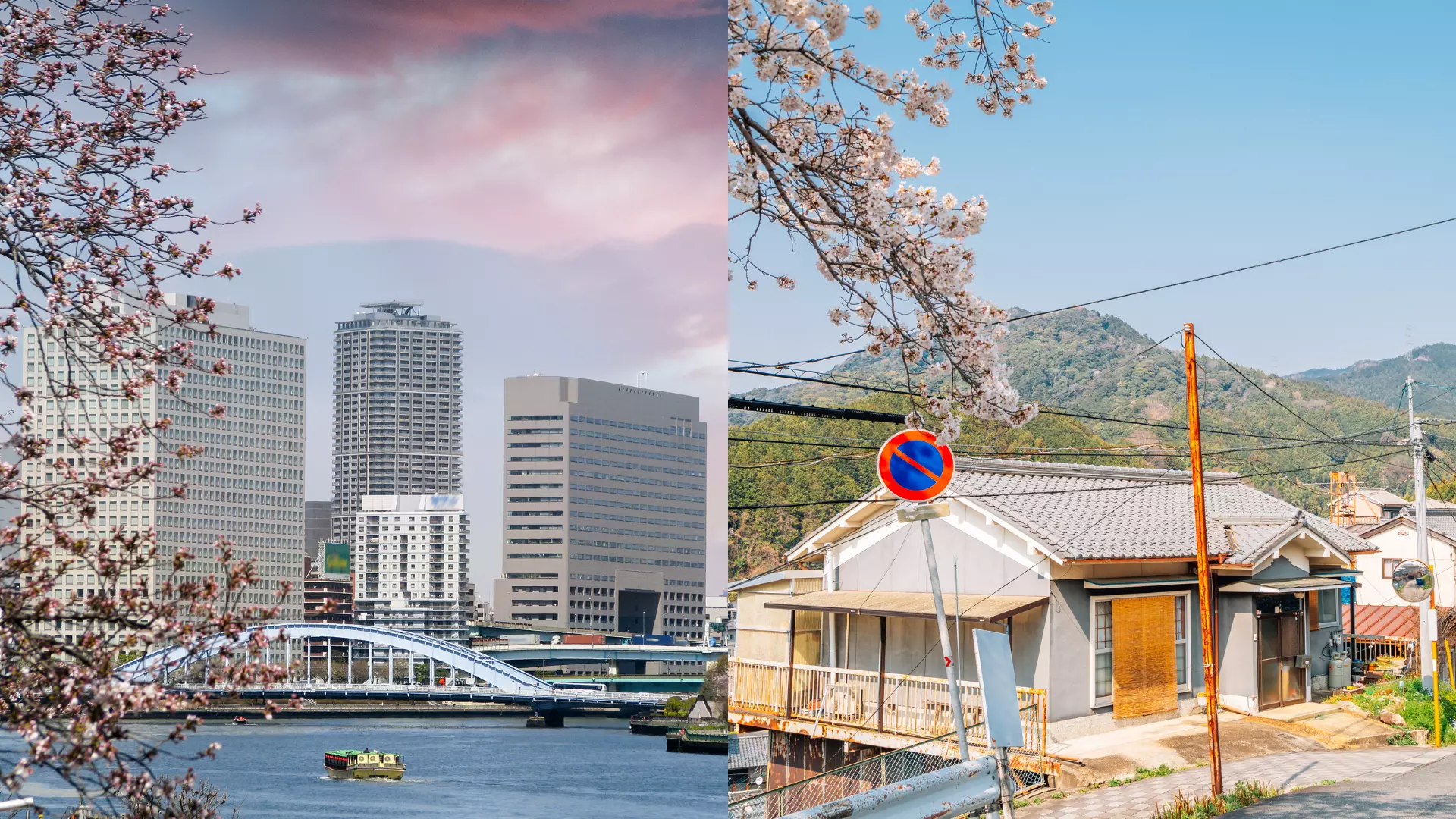
Examples of properties with a rent of 40,000 yen (in Tokyo and in rural areas)
[In the case of Tokyo]
Even within Tokyo's 23 wards, you can find properties with rent in the 40,000 yen range if you look hard enough.
For example, in suburban areas like Adachi Ward and Katsushika Ward, you can sometimes find one-room or 1K apartments that are 20 years old or older for around 40,000 yen per month. The conditions are rather strict, such as being more than a 15-minute walk from the station and having a combined bathroom and toilet, but they are not unlivable.
Additionally, considering shared housing or furnished apartments can sometimes provide a balance of convenience and comfort.
[In the case of rural areas]
On the other hand, in regional cities, you can find 1K or 1DK apartments, and in some cases even 2DK apartments with parking, for around 40,000 yen in rent.
In cities like Fukuoka, Sendai, and Hiroshima, you might be able to find a relatively new, well-equipped apartment within this budget if you're a little further from the train station. Since the cost of living is generally lower in rural areas, it tends to be easier to live a more comfortable life.
Search for a room
Only furnished properties with appliances are listed!
How to find a property with low rent
For someone living alone on a net income of 140,000 yen, minimizing rent is extremely important. Not only can you lower the rent itself, but you can also significantly reduce your monthly expenses by considering the "total cost," which includes initial fees and utilities, when choosing a property.
The key points are the following three:
- "Choose a property with low initial costs."
- "Consider properties located far from the station or older buildings."
- "We will prioritize properties that are compatible with city gas."
Because desirable properties are highly competitive, early information gathering and comparison across multiple areas are key. Let's go into detail about each of these points.
Properties with low initial costs
When signing a lease for a property, it's important not to overlook the "initial costs" that are required in addition to the rent. For properties where the security deposit and key money are equivalent to one to two months' rent, the total cost can exceed 100,000 yen even with a rent of 40,000 yen. That's why you should pay attention to properties with "no security deposit or key money" or "no brokerage fees."
Furthermore, if you choose a property with a free rent period (the first month free), you can reduce your expenses after moving in. Properties with low initial costs like these lower the barrier to moving, making it easier for people with limited savings to start living alone.
It's also recommended to narrow down your search criteria on real estate portal sites or to use a property management company that offers installment payment plans for initial costs.
Properties located outside of walking distance from the station or older buildings.
Naturally, properties located near train stations or those that are relatively new tend to have higher rents. On the other hand, properties that are more than a 15-minute walk from the station or older buildings that are 20 years old or more often have significantly lower rents, even if they are the same size and have the same amenities.
For example, even in an area about 30 minutes by train from the city center, you can easily find properties with rent in the 40,000 yen range if you choose a location further from the station. Also, even older buildings often have renovated interiors and offer comfortable living, making them a good target. By broadening your search criteria, you can find room to lower your rent, allowing you to achieve a lifestyle that suits you while keeping your living costs down.
Reasons for choosing a property with city gas
Often overlooked, the type of gas used is another factor that significantly impacts living expenses. In urban areas, the two main types are propane gas (LP gas) and city gas. City gas is cheaper, and the difference can be as much as 1,000 to 2,000 yen per month.
For those who use a lot of gas, especially in winter, this could potentially save you over 10,000 yen per year. While properties with city gas are popular, they are definitely worth considering in the long run. When looking at property listings, be sure to check if "city gas" is listed, and compare properties based on the total cost, including utilities.
How can you live comfortably on a net income of 140,000 yen?
Even with a net income of 140,000 yen, it's possible to live comfortably without strain if you find a lifestyle that suits you. It's not just about saving on living expenses; it's also important to have peace of mind and a sense of security for the future. Instead of constantly making sacrifices because "I don't have enough money," find a balance that works for you.
Here, we introduce practical options, from how to maintain mental and financial balance, to side jobs and income-boosting options, comparisons with living with family, and even living in a shared house.
Maintain a balance that doesn't put too much strain on your mental and financial health.
The most important thing when trying to maintain a frugal lifestyle is "not to try too hard."
Living a life where you cook all your meals at home every day, never eat out, and drastically cut back on utility bills can easily lead to mental exhaustion and is unsustainable. You need to treat yourself occasionally, like buying your favorite sweets at a convenience store or going out to eat with friends.
Furthermore, instead of trying to get by on saving money for everything, you can maintain peace of mind by finding "hobbies that don't cost money" or "ways to enjoy time alone." Precisely because your income is low, the key is how to create "richness that isn't solely tied to money."
Side jobs and income-boosting options
If you feel that a net income of 140,000 yen is insufficient, considering a side job or other ways to increase your income is a valid option.
For example, you can earn tens of thousands of yen extra per month by doing freelance work from home during your spare time (such as writing or data entry) or by taking on part-time jobs on weekends. Recently, services like Crowdsourcing and Coconala have made it possible to start side jobs even without any special skills.
Furthermore, obtaining qualifications often leads to salary increases or job opportunities, so taking action with a view to future income growth is important. By adopting a perspective of "reducing expenses" while simultaneously "increasing income," you can build a more stable foundation for your life.
Comparisons with family life and cases of people who receive support.
If you find it difficult to live alone on a net income of 140,000 yen, it's worth reconsidering the option of living with your family. Especially if you have a family that can support you with rent and food expenses, it might be wiser not to force yourself to become independent, but instead use that time to save for the future or to improve your skills.
Furthermore, if you receive financial support from your parents or a housing allowance from your company, the burden of living expenses will be greatly reduced. While living alone is often associated with independence, choosing a lifestyle that suits your means is also a perfectly valid decision.
If you can get support from those around you, take advantage of it and explore the lifestyle that is best for you.
Share house options
Living in a shared house is a practical option for saving on rent and utility costs. By using shared kitchens, living rooms, and bathrooms, monthly fixed expenses are often lower than living alone, and there are properties available in Tokyo for as little as 40,000 yen per month.
Furthermore, many properties come furnished with furniture and appliances, which is an advantage as it helps reduce initial costs. In addition, interacting with others can alleviate feelings of loneliness and contribute to mental stability.
While there are issues with daily routines and privacy, shared housing remains a popular lifestyle choice due to its cost-effectiveness and interpersonal relationships.
Search for a room
Only furnished properties with appliances are listed!
Real voices learned from frequently asked questions and personal experiences.
The real voices of people living alone on a net income of 140,000 yen are packed with all sorts of information, from clever ways of living and the struggles they face to their success stories.
- I'm worried about whether I can actually live like this.
- I'd like to know what kind of money-saving methods you use.
- Can you really do it?
Many people have these kinds of questions. Here, we introduce the experiences of people who are actually living this lifestyle, as well as the lessons they have learned through their failures and successes, to provide tips for those who are about to start living alone.
Experiences and stories from people who actually live alone on a net income of 140,000 yen.
We've gathered testimonials from people who actually live alone on a net income of 140,000 yen.
- "I live in an apartment in Tokyo with a rent of 42,000 yen, but to be honest, it's just barely enough."
- "If you cook your own meals and conserve electricity thoroughly, you'll be fine."
We've received many comments like these.
on the other hand,
- "Once I started keeping track of my monthly living expenses, I reduced my wasteful spending and gained confidence in how I manage my money."
There were also some positive stories like these.
In particular, many people overcome these challenges by "managing their spending" and "revising their lifestyle."
Furthermore, some people working for companies that provide housing subsidies have said that they "have been able to keep their rent effectively below 20,000 yen, which has given them more financial flexibility," highlighting the importance of utilizing support systems. Hearing from people who are actually living their lives is extremely helpful when considering how to live in the future.
Comments include: "I became lonely because I was saving too much money..." and "I'm glad I tried it!"
While some people say things like, "I'm stressed every day because I'm constantly trying to save money," and "I have to refrain from eating out with friends, which has increased my feelings of loneliness," others have positive opinions such as, "I can live at my own pace and my stress has decreased," and "I've realized the importance of having time to myself."
Living frugally often involves constant self-denial, but those who manage to be resourceful tend to feel that it was worthwhile.
For example, many people have said that their quality of life has improved by finding ways to spend their time productively without spending money, such as "restarting their hobby of reading by using the library" or "starting a side job they can do from home."
Even if you sometimes feel lonely, one of the great things about living alone is that you can create your own rhythm of life.
summary
In conclusion, it is perfectly possible to live alone on a net income of 140,000 yen. However, an unplanned lifestyle can quickly lead to financial difficulties, so it is essential to carefully manage your living expenses, assuming you keep your rent between 40,000 and 50,000 yen.
Choosing properties with low initial costs or those equipped with city gas, or considering older properties a little further from the station, are just some of the ways you can find comfortable housing with a little ingenuity. In addition to saving money, it's also important to consider ways to increase your income, such as taking on a side job or utilizing support programs. Actual experiences show that many people are building a lifestyle that suits them by being resourceful.
The important thing is to "save money without making too many sacrifices" and "choose a lifestyle that suits you." Aim for a fulfilling and stress-free life living alone by making the best choices that fit your lifestyle.