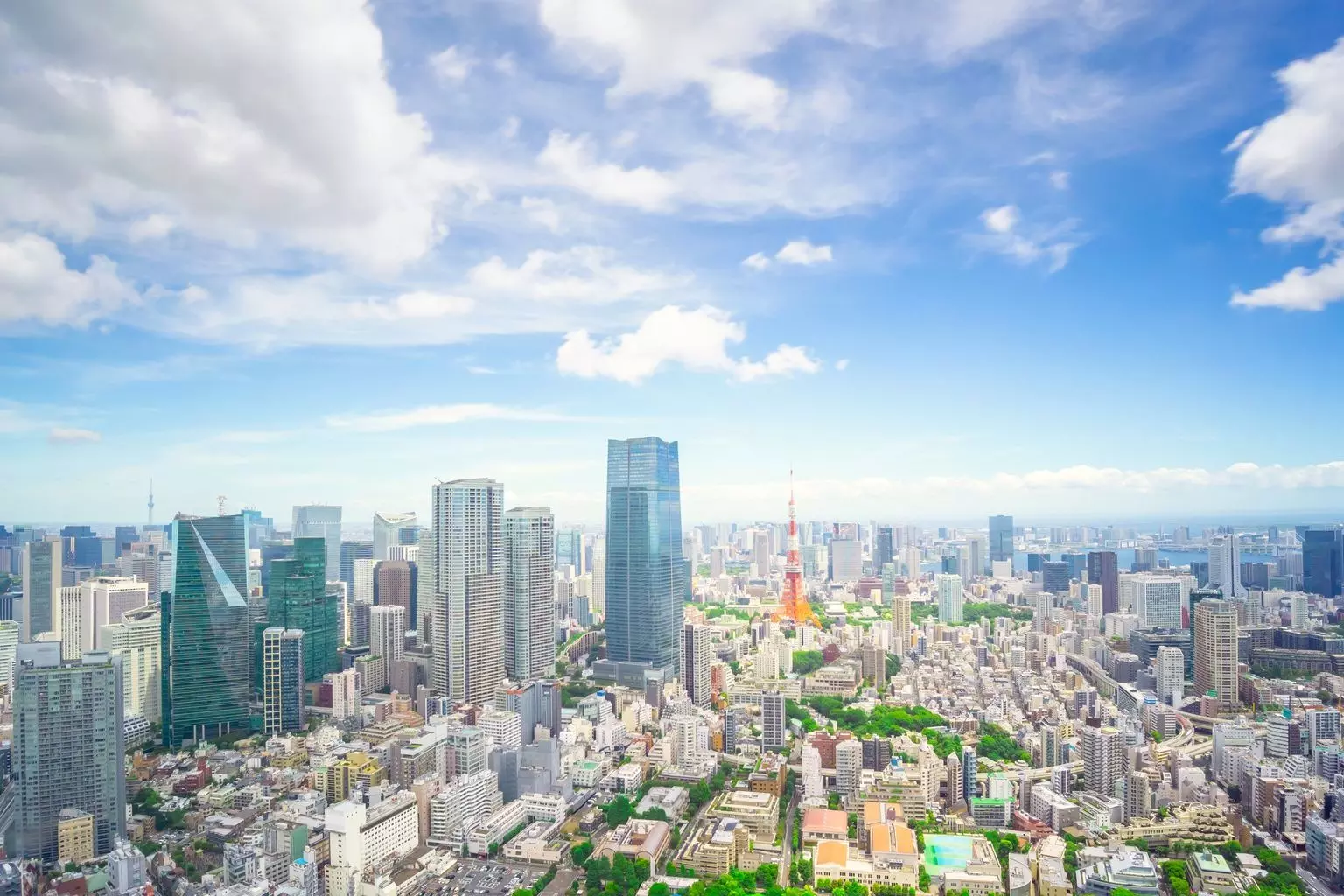
Osaka is the easiest major Japanese city to live in alone. It is compact enough to cross in half an hour, the transport is legible, and a one-room apartment costs roughly two-thirds of what the same room costs in central Tokyo. The hard part is not finding somewhere affordable — it is knowing which of the twenty-four wards actually suits how you live. This guide gives you ward-by-ward rents, six areas that work for most people, an honest note on safety, and what renting here involves if you are not Japanese.
How the city is laid out
Almost everything in Osaka hangs off one north-south line, the Midosuji subway. From north to south it runs through:
- Kita / Umeda — the business and department-store district, and the main rail hub
- Honmachi — offices, quiet at night
- Namba / Shinsaibashi (Minami) — food, nightlife, shopping
- Tennoji — the southern hub, and the cheapest of the three centres
If you live anywhere on or one stop off this line, you are within about twenty minutes of everything you need. That is the single most useful thing to know before you start looking, and it is why "which ward" matters less in Osaka than it does in Tokyo.
What a room actually costs
Average rent for a 1K unit, by ward, as of September 2026 (CHINTAI market data):
| Ward | 1K average | What it is |
|---|---|---|
| Chuo | ¥77,000 | Namba, Shinsaibashi — the centre of Minami |
| Kita | ¥75,900 | Umeda, business district, best rail access |
| Nishi | ¥73,500 | Horie — cafés, design shops, quiet streets |
| Fukushima | ¥73,200 | Walking distance to Umeda, residential |
| Tennoji | ¥73,000 | Southern hub, parks, big station |
| Naniwa | ¥72,500 | Nipponbashi, Den Den Town |
| Minato | ¥72,000 | Bentencho, near the bay |
| Yodogawa | ¥72,000 | Juso, Mikuni — one stop north of Umeda |
| Higashi-Yodogawa | ¥70,000 | Awaji — student area, two lines |
| Miyakojima | ¥69,800 | Riverside, direct to Umeda |
| Sumiyoshi / Higashi-Sumiyoshi | ¥58,000 | Southern residential, quiet |
| Hirano | ¥56,000 | The cheapest ward in the city |
The spread is the story here. The gap between the most expensive central ward and the cheapest outer one is about ¥21,000 a month — meaningful, but far smaller than the equivalent gap in Tokyo, where the same comparison runs to ¥60,000 or more. In practice this means you do not have to move far out to save money in Osaka, and moving far out does not save you very much.
Search for a room
Only furnished properties with appliances are listed!
Six areas that work for most people
Tennoji and Abeno
The best-value of the three big hubs. You get a JR loop-line station, the Midosuji and Tanimachi subways, Abeno Harukas, one of Japan's tallest buildings, a genuinely large park and a zoo, all at about ¥73,000 for a 1K. It is busy without being a nightlife district, and the southern side of the station is straightforwardly residential. If you are arriving in Osaka with no fixed idea of where to live, this is the safest first choice. Rooms near Tennoji.
Fukushima
One stop from Osaka Station and walkable to Umeda, but with the feel of a neighbourhood rather than a business district. It has one of the better small-restaurant scenes in the city — a lot of standing bars and counter-only places that are open late without the crowds of Namba. Slightly more expensive than the average, and worth it if you want to walk home from work. Rooms near Fukushima.
Tamatsukuri
On the JR loop line and the Nagahori subway, on the eastern side of the centre. Quiet, historic, low-rise, with Osaka Castle Park a short walk north. It is the choice for people who want to be ten minutes from the centre but not in it. Rooms near Tamatsukuri.
Miyakojima
North-east of the centre along the Okawa river, with a direct Tanimachi line ride into Umeda. Rents sit below the central wards, the riverside cherry trees are a genuine seasonal event, and the area is residential enough that you will hear nothing at night. Rooms near Miyakojima.
Bentencho
West towards the bay, on the loop line and the Chuo subway. Under-rated: you are fifteen minutes from Umeda, close to Universal Studios Japan if you work there, and the rents are lower than anything comparable to the east. The area itself is plain rather than charming, which is exactly why it is cheap. Rooms near Bentencho.
Juso and Mikuni
In Yodogawa ward, one or two stops north of Umeda on the Hankyu lines. Juso is scruffy and full of old izakaya; Mikuni is quieter and cheaper. Both put you under ten minutes from Umeda, which is a commute most people in Tokyo would consider fictional. Rooms near Juso · Rooms near Mikuni.
See furnished apartments in Osaka
If budget is the main constraint
Awaji, Imagawa and the southern wards
Awaji in Higashi-Yodogawa sits where the Hankyu Kyoto and Senri lines meet, so you get Umeda in about fifteen minutes and Kyoto without changing. It is a student area, which keeps rents down and keeps cheap food available. Further south, Imagawa and the Higashi-Sumiyoshi and Hirano wards drop to the high ¥50,000s — still on the Tanimachi or Kintetsu lines, just further out and quieter. Rooms near Awaji · Rooms near Imagawa.
A straight answer about Nishinari
You will read about Nishinari, the ward immediately south of Namba. It has the cheapest accommodation in urban Japan and a long history as a day-labourer district. Redevelopment has changed parts of it substantially, and the northern edge near Kishinosato-Tamade is now much like any other working-class Osaka neighbourhood. It is also genuinely different from the rest of the city in ways that a rent figure will not tell you.
The sensible approach is not to rule it out or to jump at the price, but to go and walk the specific streets around any building you are considering, in the evening, before you decide. That advice applies everywhere, and it applies here more than anywhere.
Search for a room
Only furnished properties with appliances are listed!
Safety, honestly
Osaka has the highest recorded crime rate per head of any Japanese prefecture. The bulk of it is property crime — bicycle theft and shoplifting, concentrated in the entertainment districts of Minami and around some stations late at night. In absolute terms it remains a very safe city by international standards, and violent crime against strangers is rare.
The practical version: avoid ground-floor rooms with windows onto the street, lock your bicycle twice, be more alert around Namba after midnight than you would be in a residential ward, and do the night walk from station to building before signing. None of this is unusual advice for a city of nearly three million people.
What moving in actually costs
The conventional route
The monthly rent is not the barrier. On a standard Japanese lease you are asked, at signing, for a deposit of one to two months, non-refundable key money of one to two months, an agency fee of about one month, a guarantee company fee, fire insurance, a lock change and the first month in advance. On a ¥73,000 room in Tennoji that is roughly ¥330,000 to ¥440,000 — before furniture. Japanese rentals come completely empty, so a bed, fridge, washing machine and microwave add another ¥150,000 to ¥250,000.
Then there is screening. Many landlords require a Japanese guarantor, and some will not accept foreign residents at all. It is legally grey and practically common, and it is the thing that catches people out when they have already booked a flight.
The alternative
XROSS HOUSE operates share houses and furnished apartments across eleven prefectures, including central Osaka.
- No deposit, no key money, no agency fee
- Initial cost of ¥30,000 for a share house room, and ¥30,000 for a furnished apartment under the current campaign (normally ¥50,000)
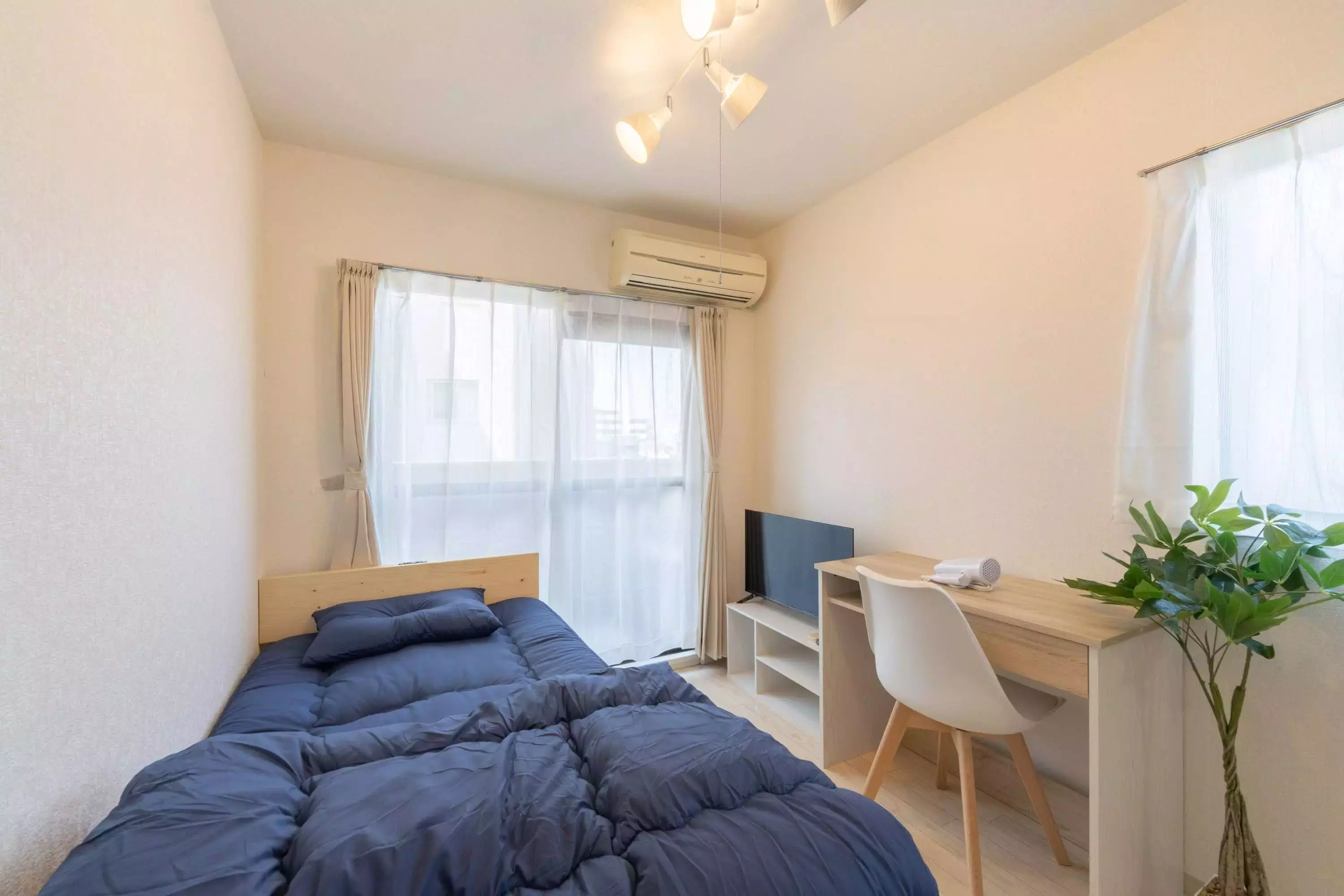
- Furniture and appliances already in the room — and in Osaka the bedding is installed too, which is not the case in our Tokyo-area apartments
- No Japanese guarantor to find — a guarantee company is arranged for you. Its initial and monthly fees are separate and are quoted before you sign
- A support fee of ¥1,500 a month on every property. Share houses and shared apartments add a common-area fee of ¥15,000 covering water, electricity, gas, Wi-Fi and shared supplies; in a furnished apartment you contract utilities yourself or take an optional all-in plan at ¥15,000 a month
- Contracts from one month, one month's notice, no early-termination penalty, and moving to another of our rooms waives both the leaving fee and the new initial cost
- Contracts can be signed online from outside Japan, with viewings done remotely
Compare monthly outgoings rather than headline rent. The ¥73,000 above excludes utilities of roughly ¥10,000 to ¥15,000 and internet at ¥4,000 to ¥5,000, and lands ¥330,000-plus on you at signing. The honest caveat is that a share house private room shares the kitchen and bathroom — you are trading shared water-using space for a much lower entry cost, not buying the same thing cheaper. If you want the whole unit to yourself, the furnished apartments are the closer comparison.
Search for a room
Only furnished properties with appliances are listed!
Osaka or Tokyo?
If your work or study is fixed in one city, this question answers itself. If it is not, the practical differences are these. Osaka rent runs roughly 25 to 35 per cent below equivalent central Tokyo. Commutes are shorter because the city is smaller. Food is cheaper and, by broad consensus, better. The English-speaking job market is thinner, and the foreign community is smaller and more concentrated. Kyoto, Kobe and Nara are all under an hour away, which changes what a day off looks like.
People who move from Tokyo to Osaka rarely complain about the city. They complain about the job market. Weigh that one first.
Frequently asked questions
How much do I need per month to live alone in Osaka?
A realistic single-person budget in a ¥70,000 room is about ¥130,000 to ¥160,000 a month all in — rent, utilities, internet, phone, food and transport. Eating out often pushes the upper end; cooking and a bicycle pull it towards the lower.
Which area is best for a first apartment in Osaka?
Tennoji, for most people. It has three rail systems, a large park, mid-range rents and enough everyday shopping that you never need to plan a trip. Fukushima and Miyakojima are the next two if you want somewhere calmer.
Is Osaka safe for a woman living alone?
Yes, with the same practical precautions you would take in any large city. Prioritise a room above the ground floor, an auto-locking entrance and a lit route from the station, and be more deliberate about where you are late at night in the Minami entertainment area than in a residential ward.
Do I need a car in Osaka?
No. Osaka is one of the easiest cities in Japan to live in without one. Between the subway, the JR loop line and a bicycle, a car is a cost rather than a convenience — and parking in the central wards is expensive.
Can I rent in Osaka without a Japanese guarantor?
On a conventional lease, usually not. Most landlords require a Japanese guarantor, an approved guarantee company, or both. Share houses and furnished-apartment operators handle this internally, which is why most people in their first year in Japan start there.
Is Osaka cheaper than Tokyo?
Yes, by roughly a quarter to a third on rent for an equivalent room, and noticeably on food. Utilities, transport and phone costs are broadly the same nationwide.
In short
Osaka rewards people who want a big city without big-city rent. Stay on or one stop off the Midosuji line and almost any ward works; Tennoji, Fukushima, Tamatsukuri, Miyakojima, Bentencho and the Yodogawa stations cover most budgets and most temperaments. The rent gap between the priciest and cheapest wards is only about ¥21,000, so choose for the neighbourhood you want rather than the last few thousand yen.
If what is stopping you is the ¥330,000 at signing rather than the monthly rent, that is the part we exist to solve. Tell us your budget and the station you need to reach, and we will tell you what is available now.