
Soshigaya-Okura is a small station in Setagaya that most guidebooks skip and most Japanese house-hunting forums describe as "nice but inconvenient". Both are fair. It is a quiet, low-rise residential neighbourhood twenty-five minutes from Shinjuku with a shopping street built around Ultraman, almost nothing open after nine, and rents that are not as cheap as the quiet suggests. This guide explains exactly what you get and what you give up.
Short answer: who this neighbourhood is for
If you want to come home to somewhere calm, cook, walk to a park at the weekend and know the people at the greengrocer, Soshigaya-Okura is close to ideal. If you want to be able to eat at midnight, walk to a cinema or do all your shopping in one building, it will frustrate you within a month.
That is the whole trade. Everything below is detail on how the trade actually plays out day to day.
Where it is
Soshigaya-Okura Station is in western Setagaya on the Odakyu Odawara Line, between Chitose-Funabashi and Seijogakuen-mae. Only local trains stop here — expresses and rapid services run straight through, which is the single fact that shapes the neighbourhood most.
Getting around
The Odakyu line
- Shinjuku — about 25 minutes, usually changing to a faster train at Seijogakuen-mae or Kyodo
- Shibuya — about 30 minutes via Shimokitazawa
- Shimokitazawa — about 12 minutes
- Yoyogi-Uehara, for the Chiyoda subway line — about 18 minutes
Because only local trains stop, you almost always get a seat going in, and you almost always have to change coming back if you board an express. Trains are frequent enough that this costs you a few minutes rather than a real wait.
Buses and the wider area
Bus routes run south towards Yoga and north towards Chitose-Funabashi, which matters more than it sounds — a good part of the residential area here is a bus ride rather than a walk from the station. If you are comparing stations along this stretch, we operate rooms at Soshigaya-Okura itself, and at Chitose-Funabashi, Kyodo, Gotokuji and Shimokitazawa.
Search for a room
Only furnished properties with appliances are listed!
The Ultraman shopping street
Eiji Tsuburaya, the special-effects director behind Godzilla and the creator of Ultraman, founded Tsuburaya Productions in Kinuta, a ten-minute walk from the station, in 1963. He lived in Soshigaya. In April 2005 the three shopping associations around the station merged and renamed themselves the Ultraman Shopping Street, and in 2022 the station plaza was rebuilt with a large Ultraman statue at its centre.
What this means in practice is a long, low-key strip of independent shops running north and south of the station: greengrocers, a fishmonger, bakeries, a few good coffee places, small restaurants that are mostly family-run. There are seasonal events, hero shows for children, stamp rallies. It is genuinely a community rather than a retail development, and it is the main reason people who move here tend to stay.
It is also almost entirely shut by nine in the evening.
What people mean when they say they would not live here
The evening ends early
Outside convenience stores, very little is open past 21:00. There are no late izakaya strips, no karaoke, no bars that fill up after the last train. If your social life happens after work, you will be commuting to it.
Less than you would expect within a ten-minute walk
The station's walkable catchment is smaller than the map suggests. The land rolls, so a listed "ten minutes" can be a genuine hill, and a large part of the surrounding residential area is realistically bus territory. If a short door-to-platform time is your first requirement, an express station like Seijogakuen-mae or a semi-express one like Kyodo will serve you better.
Quiet streets are dark streets
The main roads near the station are well lit. Once you turn off them into the residential grid, street lighting thins out and there are very few people about after about ten. Crime here is low even by Tokyo standards, but "low crime" and "comfortable walking alone at 23:00" are not the same feeling, and it is worth walking your actual route home at night before you sign anything.
No large shops
There are supermarkets, drugstores and convenience stores, but no shopping mall, no department store and no cinema. Weekly bulk shopping means either a bus, a bike, or delivery. For a single person this is a minor annoyance; for a family it is a weekly logistics decision.
Search for a room
Only furnished properties with appliances are listed!
What the people who stay actually like
Parks
Kinuta Park is a fifteen-minute walk or a short bus ride away — a genuinely large park with lawns, cherry trees and an art museum, not a token patch of grass. Okura Sports Park is closer still. For anyone coming from a city where green space means a square with a fountain, having this within walking distance changes what a weekend looks like.
The tone of the street
The population skews towards families and older residents. There is very little noise, very little turnover, and shopkeepers who will recognise you by the third visit. If you have lived in Japan before and found the anonymity of central Tokyo tiring, this is the opposite of that.
Browse share houses in Setagaya
What it costs
Market rent
Average rent within a ten-minute walk of the station, LIFULL HOME'S 2026 data:
| Type | Soshigaya-Okura | Seijogakuen-mae (next stop) |
|---|---|---|
| Studio | ¥91,800 | ¥126,900 |
| 1K | ¥92,300 | ¥82,500 |
| 1DK | ¥119,400 | — |
| 2LDK | ¥236,900 | ¥252,200 |
Two notes on reading this. First, the studio and 1K figures at each station move independently because the number of listings of each type is small — treat roughly ¥90,000 as the honest single-person number here rather than either column alone. Second, this is not a cheap neighbourhood. It is quieter than Seijogakuen-mae and somewhat less expensive for a family, but nobody moves to Soshigaya-Okura to save money on rent.
The part that stops foreign residents
On a conventional lease the barrier is not the monthly rent, it is the signing. Deposit of one to two months, non-refundable key money of one to two months, an agency fee of about one month, a guarantee company fee, fire insurance, a lock change and the first month in advance. On a ¥92,000 room that is roughly ¥410,000 to ¥560,000 before furniture — and Japanese rentals are genuinely empty, so a bed, fridge, washing machine and microwave add another ¥150,000 to ¥250,000.
Then there is screening. Many landlords require a Japanese guarantor, and some will not rent to foreign residents at all. It is legally grey and practically common.
The alternative
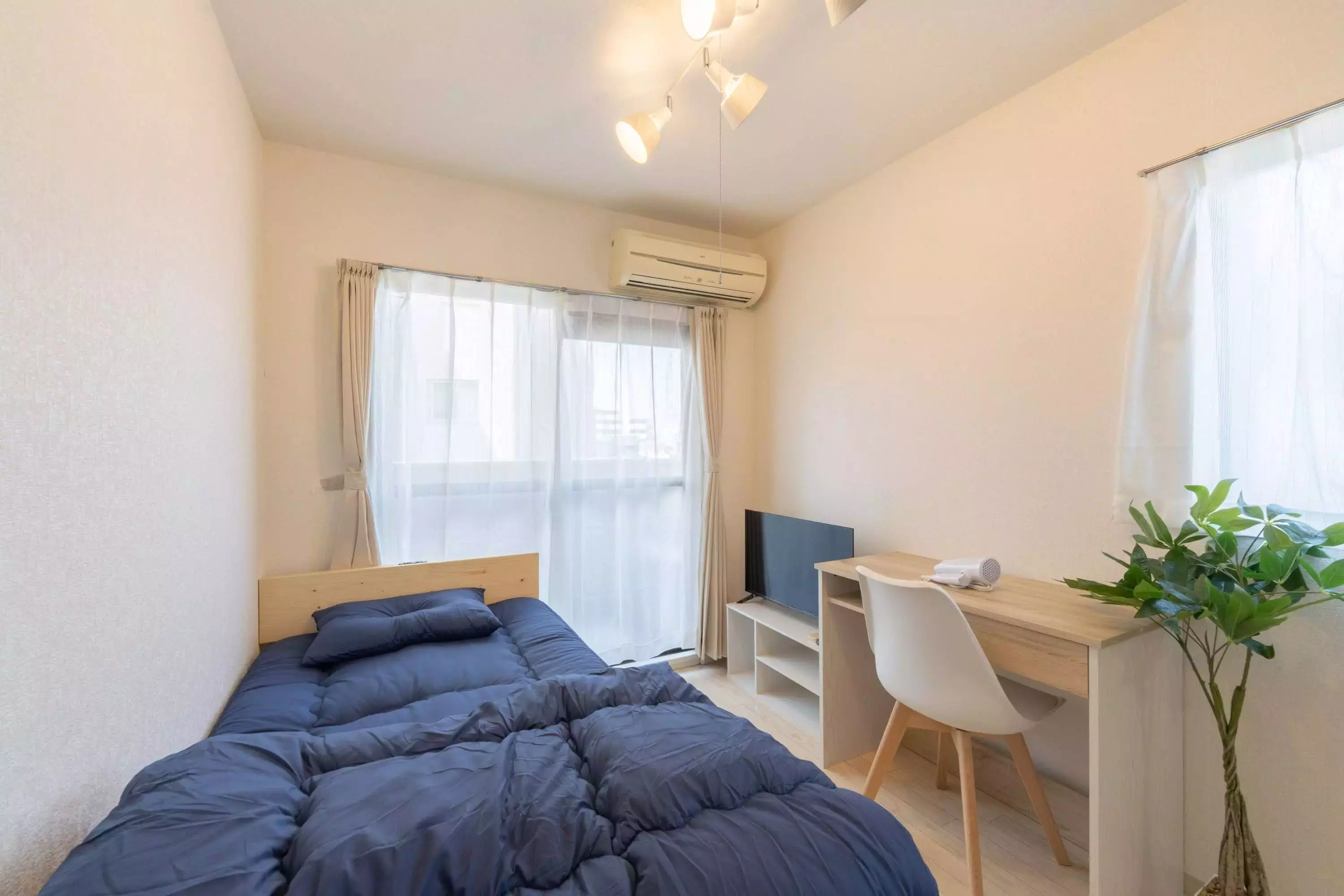
XROSS HOUSE operates share houses and furnished apartments across eleven prefectures, including furnished apartments five to fifteen minutes' walk from Soshigaya-Okura Station. Rents on those move with the market but have been sitting in the high ¥70,000s to low ¥80,000s — below the ¥91,800 area average, with the appliances already installed.
- No deposit, no key money, no agency fee
- Initial cost of ¥30,000 for a share house room, and ¥30,000 for a furnished apartment under the current campaign (normally ¥50,000)
- Furniture and appliances already in the room
- No Japanese guarantor to find — a guarantee company is arranged for you. Its initial and monthly fees are separate and are quoted before you sign
- A support fee of ¥1,500 a month on every property. Share houses and shared apartments add a common-area fee of ¥15,000 covering water, electricity, gas, Wi-Fi and shared supplies; in a furnished apartment you contract utilities yourself or take an optional all-in plan at ¥15,000 a month
- Contracts from one month, one month's notice, no early-termination penalty, and you can move to another of our rooms without paying the leaving fee or a new initial cost
Compare monthly outgoings rather than headline rent: the ¥92,000 above excludes utilities of roughly ¥10,000 to ¥15,000 and internet at ¥4,000 to ¥5,000, and lands that ¥410,000-plus on you at signing. The honest caveat is that a share house private room shares the kitchen and bathroom — you are trading shared water-using space for a far lower entry cost, not buying the same thing cheaper. If you want the whole unit to yourself, the furnished apartments are the closer comparison.
Search for a room
Only furnished properties with appliances are listed!
Who it suits
It works well if
You work normal hours in Shinjuku, Otemachi or along the Chiyoda line. You cook. You want a park, not a plaza. You are in Japan for more than a year and want a neighbourhood rather than an address. You have children, or plan to.
It works less well if
You are here for a year and want to be out most nights — Shimokitazawa, Nakano or Koenji will give you far more for the same rent. You work late and want food on the way home. You want a short, flat walk from the ticket gate to your door.
See furnished apartments in Tokyo
Frequently asked questions
Is Soshigaya-Okura safe?
Yes. Setagaya is a residential ward with low crime, and this is one of its quieter corners. The practical caution is darkness rather than danger: side streets have thin lighting and few people after ten, so walk your route home at night before deciding on a building.
How long does it take to get to Shinjuku?
About 25 minutes, generally changing at Seijogakuen-mae or Kyodo for a faster train. Shibuya is about 30 minutes via Shimokitazawa.
Why is there an Ultraman statue at the station?
Eiji Tsuburaya founded Tsuburaya Productions nearby in 1963 and lived in Soshigaya. The local shopping associations merged in 2005 and took the name; the current statue arrived with the station plaza rebuild in 2022.
Is it a good area for a woman living alone?
Many women live here and the crime numbers support it. Prioritise a building on a lit main street, take a room above the ground floor, look for an auto-locking entrance, and do the night walk from the station once.
Is Soshigaya-Okura cheaper than Seijogakuen-mae?
For a family-sized apartment, yes — around ¥15,000 a month less for a 2LDK. For a single room the difference is small and depends entirely on what happens to be available. The real difference is atmosphere, not price.
Does XROSS HOUSE have rooms here?
Yes, at Soshigaya-Okura and at several nearby stations on the Odakyu line. Availability changes weekly, so check the station page for what is open now.
In short
Soshigaya-Okura is not a compromise between city and suburb — it is a genuine residential neighbourhood that happens to be twenty-five minutes from Shinjuku. It gives you quiet, parks, a real shopping street and neighbours who know you. It takes away late-night food, big shops and the ability to fall out of a bar and walk home.
People who describe it as "not somewhere I would live" are usually telling you about their own schedule rather than about the neighbourhood. If the trade sounds right and the move-in cost is what is stopping you, tell us your budget and we will show you what is open.