What kind of town is Komagome? Basic information and surrounding environment explained.
Komagome is a tranquil neighborhood located in the northern part of Tokyo's 23 wards, spanning Bunkyo and Toshima wards. Its appeal lies in its excellent transportation access, with two train lines (Yamanote Line and Namboku Line), its quiet residential area, and its abundance of natural beauty, including Rikugien Garden and the Former Furukawa Garden.
In recent years, in addition to families with children and the elderly, these areas have become increasingly popular among single people and dual-income couples who want to live in a quiet and safe area with easy access to the city center.
Here, we'll provide a detailed overview of the basic information and surrounding environment around Komagome Station, including perspectives from a property search standpoint.
Location and access between Komagome Station and Hon-Komagome Station
Komagome Station is a terminal station where the JR Yamanote Line and the Tokyo Metro Namboku Line intersect, providing direct access to various parts of Tokyo. The area surrounding the station is a quiet residential area with plenty of greenery, and is known as a town where many people have lived for many years.
On the other hand, Hon-Komagome Station is located about 8 to 10 minutes' walk from Komagome Station and is served only by the Namboku Line. Since both stations are within walking distance, it is common to compare both the "Komagome Station area" and the "Hon-Komagome area" when searching for rental properties.
Even with the same floor plan, rent and market prices can vary greatly depending on factors such as the distance to the station and the surrounding environment. Therefore, it's important to carefully check factors such as "ease of living," "brightness of streets at night," and "availability of shops" beforehand.
The appeal of a location with access to the Yamanote Line and Namboku Line.
One of the biggest attractions of Komagome Station is that you can use two train lines: the Yamanote Line and the Namboku Line.
The Yamanote Line is a major railway line that circles Tokyo, providing direct access to major central Tokyo terminals such as Ikebukuro, Tokyo, and Shibuya stations, making it extremely convenient for commuting, going to school, and shopping on weekends.
On the other hand, the Namboku Line provides access to Meguro, Nagatacho, and Iidabashi, and offers smooth transfers to various parts of Tokyo. Furthermore, it is praised for its frequent train service, which reduces stress even during morning and evening rush hours.
This excellent accessibility is one of the factors that pushes Komagome high in "conveniently located neighborhoods" rankings, and many people feel that "even if the rent is a little high, it's worth living there."
Convenient for commuting to work or school? Transfer times to major stations.
The main commuting routes from Komagome Station and their estimated travel times are as follows:
- To Ikebukuro Station: Approximately 10 minutes by Yamanote Line
- To Shibuya Station: Take the Yamanote Line and transfer at Ebisu, then take the Saikyo Line or Hibiya Line, etc. (approximately 25 minutes).
- To Tokyo Station: Approximately 20-25 minutes by transferring between the Namboku Line and the Marunouchi Line.
Being able to reach these major stations within 30 minutes makes this location extremely convenient, even within Tokyo's 23 wards.
Komagome is a particularly attractive option for those who commute by train and want to shorten their daily commute time, or those who want to minimize their children's school commute time.
Furthermore, since major terminals such as Ikebukuro, Tokyo, Shinjuku, and Ueno are included within the range of the commuter pass, there is also the advantage of saving on transportation costs.
Five reasons why people say they "don't want to live" in Komagome
Komagome Station boasts excellent accessibility with two train lines, the Yamanote Line and the Namboku Line, and is attractive for its natural surroundings, including Rikugien Garden and the Former Furukawa Garden. However, some people say it's "difficult to live in" or "someone they wouldn't want to live in."
There are several points you should know beforehand, such as the inconveniences you might experience once you actually live there, and things like safety and shopping conditions that you only discover after you've settled in.
This chapter thoroughly explains the reasons why people often say they "don't want to live" around Komagome Station, based on actual reviews and information from real estate websites.
① There are many hills, making it inconvenient for bicycles and strollers.
The terrain around Komagome is hilly, and the Hon-Komagome area in particular is characterized by many narrow streets and steep slopes. As a result, it is somewhat unsuitable for getting around by bicycle or pushing a stroller, and families with young children and the elderly often say that it is difficult to live there.
In particular, if there are hills between supermarkets or shopping facilities near train stations and residential areas, carrying groceries home can be a real struggle. When choosing a property, be sure to check in advance whether the route from the station is flat.
② There are few restaurants and entertainment facilities that cater to young people.
Around Komagome Station, there are many restaurants catering to families and the elderly (soba noodle shops, set meal restaurants, coffee shops, etc.), but there are hardly any trendy cafes or large chain izakayas.
As a result, many young people feel that there are "no stylish shops" and that the area is "boring," and some choose to go out on their days off to spend time in other areas.
Furthermore, because there are very few entertainment facilities (movie theaters, karaoke bars, arcades, etc.), some people say they "don't see any benefit in spending their holidays in Komagome."
If you're looking for a neighborhood geared towards young people, you might find more satisfaction in areas closer to Ikebukuro Station or Shibuya Station.
③ Is it unsafe for women living alone because there are few people around at night?
During the day, Komagome has a calm and peaceful atmosphere, but at night, the streets around the station become less crowded, and especially in the residential areas, there are comments such as "there are many dark streets" and "it's a little scary when going home."
Especially for women living alone, a combination of factors such as "no convenience stores on the way from the station to home," "narrow streets," and "few streetlights" can cause anxiety.
However, the area on the Bunkyo Ward side is considered to have relatively good public safety, and some say that "it's okay as long as you choose a place where you can live with peace of mind."
④ Noise problems along railway tracks and metropolitan roads
Because Komagome Station is on the Yamanote Line, properties located along the tracks or near the platforms may be bothered by the noise of trains and announcements. In particular, during late nights and early mornings, or during times of frequent train arrivals and departures, some people may find it difficult to sleep or that the noise is too loud.
Additionally, properties located along metropolitan roads or main thoroughfares may be subject to frequent traffic noise and sirens from ambulances and fire trucks, making them unsuitable for those who prioritize a quiet lifestyle.
When searching for a property, using real estate websites like SUUMO and specifying conditions such as "not located along train tracks" or "away from the main road" can significantly improve the livability of the area.
⑤ Some people feel that the area around the station is small and that there are few shopping options.
While there are supermarkets, drugstores, and convenience stores in front of Komagome Station, there are no large facilities like shopping malls, which may be disappointing for those who want to do all their shopping in one place.
Some reviews mention that "the real estate company described it as a convenient location near the station, but in reality there are few shops" and "the area around the station lacks vibrancy," which may feel strange to those accustomed to shopping malls in smaller cities.
However, Komagome is only about 10 minutes away by train from areas with large commercial facilities such as Ikebukuro and Ueno stations, so you can manage by using it for everyday shopping and going to the city center for bulk shopping on weekends.
Search for a room
Only furnished properties with appliances are listed!
Is Komagome really that unsafe? Actual data and the voices of residents.
Komagome Station is often considered as a potential location for those who want to live in a quiet neighborhood or choose a safe area.
On the other hand, some people have expressed concerns such as "the streets are sparsely populated at night despite being along the Yamanote Line" and "the area around the station is small and unsettling," highlighting the importance of understanding the surrounding environment before actually moving in.
This article explains the safety and security situation around Komagome Station, which spans Bunkyo and Toshima wards, based on official data and word-of-mouth. If you are looking for a quiet and safe place to live, please use this as a reference when searching for a property.
Comparing the public safety situations in Bunkyo Ward and Toshima Ward.
Komagome Station is located in an area where the east side (towards Hon-Komagome) is in Bunkyo Ward, and the west side (towards Komagome West Exit) is in Toshima Ward. There are differences in the safety and security situation of each area, which can be reflected in the statistics.
Bunkyo Ward is one of the wards in Tokyo with the lowest crime rates, and is particularly prone to low rates of violent crime and burglary.
On the other hand, Toshima Ward has a higher number of incidents overall than Bunkyo Ward, mainly due to the bustling Ikebukuro area, but the area around Komagome Station is mainly residential, so the actual level of safety is low.
Furthermore, because it's located along the Yamanote Line, police and police box patrols are relatively thorough, and there aren't enough problems to definitively classify it as a "bad area."
Even if you feel uneasy walking alone at night, you can live there with peace of mind if you check the number of streetlights and the number of people beforehand.
A sense of security in an area with a quiet residential neighborhood.
The area around Komagome is characterized by many residential neighborhoods with low-rise apartments and detached houses, and some areas have well-maintained green spaces and small parks. In particular, the Hon-Komagome area, where Rikugien Garden is located, and the Nakazato/Komagome 1-chome area are known as quiet residential areas.
This surrounding environment provides a sense of security for families with children and the elderly, allowing for a quiet life free from noise and concerns about safety.
In recent years, the number of properties with 2LDK and 3LDK layouts suitable for families has also increased, making them ideal for those looking for a home to live in for a long time.
Many reviews mention that it is "quiet and easy to live in."
In reviews from people who actually live in Komagome, and on real estate websites like Suumo, many people give positive feedback such as, "It has a quiet and peaceful atmosphere," "I felt safe and secure after actually living there," and "There are supermarkets and drugstores, so shopping is convenient."
Thus, people who prioritize quality of life say, "It's not flashy, but it's definitely a good town," and some are willing to pay high rents to live there. The low noise level and quiet nights are "a big advantage."
Check the average rent and property situation around Komagome Station.
Many people wonder, "What's the average rent like if I live near Komagome Station?" and "How much would it cost to rent a 2LDK apartment?"
Komagome is a popular area known for its peaceful living environment and convenient transportation, but it actually has relatively low rents compared to other areas in Tokyo's 23 wards, and there are many cost-effective rental properties available.
Here, we'll provide detailed information on average rents by apartment type (1R, 1K, 2LDK, etc.), trends in search criteria on real estate websites like Suumo, and recommended areas around Hon-Komagome and Komagome stations.
Average rent by apartment type (e.g., 1R, 1K, 2LDK)
The average rent around Komagome Station is somewhat cheaper compared to central Tokyo, making it a particularly attractive area for single people and working couples.
1R/1K: Approximately 80,000 to 120,000 yen
Studio apartments and 1K apartments along the Yamanote Line are relatively inexpensive. Prices will be closer to the upper limit for apartments with good conditions, such as being within a 5-minute walk of a station.
2LDK: Approximately 150,000 to 200,000 yen
In the Hon-Komagome area, there are some cheaper properties available, and those priced over 200,000 yen are mainly newer, close to the station, and family-type.
Thus, while there is a wide range of prices depending on the floor plan, age of the building, and distance from the station, there is a strong demand for "living in a quiet environment close to the station," and popular properties can be snapped up quickly even if they are priced above market value.
What are the popular features on real estate websites like Suumo?
Looking at the search criteria on real estate information websites (e.g., SUUMO, HOMES, at home, etc.) reveals the demand for properties in the Komagome area.
The following conditions are particularly popular:
- Apartments with 2LDK or more, and with one or fewer transfers to Tokyo Station or Ikebukuro Station.
- Located along the Namboku Line, within a 10-minute walk from the station.
- There are supermarkets and drugstores nearby.
- Located in a quiet residential area, with good public safety.
Properties that meet these criteria tend to attract a wide range of inquiries, including from families, working couples, and single women.
Furthermore, the fact that it offers a quiet environment where elderly people and those working from home can work in peace is also highly appreciated.
Recommended areas around Hon-Komagome and Komagome Stations
When searching for property around Komagome Station, it's important to understand the differences between the Komagome Station side and the Hon-Komagome Station side. Here's a comparison of their characteristics:
Honkomagome area (Bunkyo Ward side)
- Features: Many quiet residential areas, good public safety. Rikugien Garden is nearby, and there is plenty of greenery.
- Rent: It tends to be relatively inexpensive, and you can sometimes find 2LDK apartments for around 150,000 yen.
- Note: Some areas have few supermarkets or restaurants, making shopping and dining out somewhat inconvenient.
Komagome Station West Exit Area (Toshima Ward side)
- Features: Supermarkets, drugstores, local shopping streets, and restaurants are all located in front of the station, making shopping convenient.
- Rent: It tends to be a bit higher for properties near the station or newer buildings, but it's reasonable considering the access and convenience.
- Note: The road in front of the station is somewhat crowded, so it may not be suitable for those who prioritize "quietness."
Both areas have their advantages and disadvantages, so it's best to choose the one that suits your lifestyle and commuting needs.
In particular, for those who want to commute on the Yamanote Line and prefer a quiet living environment, mid-rise condominiums on the Hon-Komagome side are extremely popular.
Search for a room
Only furnished properties with appliances are listed!
How is the transportation access to Komagome Station? We'll explain transfers and commuting options.
One of the biggest attractions of Komagome Station is its excellent access to major stations.
With access to both the Yamanote Line and the Tokyo Metro Namboku Line, you can reach major areas in Tokyo such as Ikebukuro, Tokyo, and Shibuya in a short time, even with transfers. You'll appreciate the convenience in a variety of situations, including commuting, going to school, shopping, and weekend outings.
Here, we'll provide a detailed explanation of transportation conditions at Komagome Station, including transfer times, train frequency, and even congestion during rush hour.
Access time to major stations such as Ikebukuro, Tokyo, and Shibuya
From Komagome Station, travel time to major terminal stations in Tokyo is extremely short, as shown below, which is a significant advantage for commuters and students.
It takes about 10 minutes to Ikebukuro Station on the Yamanote Line, about 20-25 minutes to Tokyo Station using the Namboku Line and Marunouchi Line, and about 25 minutes to Shibuya Station on the Yamanote Line.
These stations are often accessible with one or fewer transfers, making for a stress-free journey.
Convenience and frequency of the Namboku Line and Yamanote Line
At Komagome Station, you can use two lines: the JR Yamanote Line and the Tokyo Metro Namboku Line.
The Yamanote Line operates at intervals of 4 to 5 minutes during the morning and evening rush hours, and is a major line connecting the city in a circular pattern, making it convenient for getting anywhere.
The Namboku Line operates at 5-minute intervals during the day, with even more frequent service during rush hour. It traverses the heart of the city and provides direct access to Nagatacho, Yotsuya, and Meguro, allowing you to reach multiple areas without transfers.
Furthermore, even if one line is shut down due to some trouble, it's easy to recover using the other line, which is highly commendable in terms of traffic stability.
How crowded is it during rush hour?
The Yamanote Line is extremely crowded during the morning rush hour. Trains heading towards Ikebukuro Station are particularly congested with commuters.
However, the platforms at Komagome Station are designed to be relatively spacious, and some say they are "better than other Yamanote Line stations."
Additionally, when using the Namboku Line to travel towards the city center (Iidabashi, Yotsuya, Nagatacho), the smooth transition from above ground to underground makes the Namboku Line route more comfortable for those who want to avoid crowds.
For those who prioritize a comfortable commute and want to live near a station with access to multiple train lines, Komagome is truly an ideal station with excellent transportation access.
Is living in Komagome convenient? Shopping, restaurants, and facility information.
For those who believe that "even with good transportation access, it's a problem if daily life is inconvenient," the surrounding facilities and shopping environment are extremely important.
Here, we'll provide a comprehensive overview of supermarkets, shopping streets, and restaurants around Komagome Station. Check out the "ease of living" and "unique local features" to help you find the perfect place to live.

Supermarkets, drugstores, and other essential infrastructure
The area around Komagome Station has a compact layout with facilities that support daily life. There are several supermarkets, drugstores, and convenience stores within walking distance of the station, making it convenient for shopping before and after work.
However, the number of shops in front of the station is somewhat smaller compared to towns with large commercial facilities, and some people feel that their shopping options are limited.
Additionally, in some residential areas, it can take more than 5 minutes to walk to a supermarket, so it's important to check the distance and opening hours in advance.
The appeal of affordable shops and locally-focused shopping streets
Towards the north exit of Komagome Station, you'll find traditional shopping streets such as "Somei Ginza Shopping Street" and "Azalea Street Shopping Street." There are many locally-focused shops, including greengrocers, butchers, and delicatessens, and many people have commented that "you can buy fresh goods at low prices" and "there's a warmth that only independently owned shops can offer."
Furthermore, because there are fewer chain stores, it's a great place to live for people who prefer a quiet and peaceful atmosphere.
Summary of restaurant genres and customer reviews
The restaurants around Komagome Station include Japanese set meal restaurants, ramen shops, cafes, Chinese restaurants, as well as privately owned izakayas, retro Showa-era coffee shops, and Western-style restaurants.
Many reviews on review sites mention things like "the owner is friendly," "the food is delicious and reasonably priced," and "it's quiet and relaxing."
On the other hand, some people feel that there are few trendy shops catering to young people and that it's not a highly competitive area for restaurants, so those seeking flashiness and a wide variety of new eateries may find it lacking.
Search for a room
Only furnished properties with appliances are listed!
Reasons why people feel "it was good to live in Komagome"
While there are reasons why some people might not want to live there, many people who actually live in Komagome also express positive opinions, such as "I'm glad I live here" and "I can live a peaceful life here."
Property listing websites and review sites highly praise the quietness of the neighborhood and the quality of the living environment, and many people feel that it is a more pleasant place to live than other areas along the Yamanote Line.
Here, we'll share specific examples of what residents who appreciate Komagome have to say, as well as the main reasons why they feel it's a good place to live.
A calm streetscape and a quiet living environment
Komagome is an area where the convenience of the area around the station coexists with quiet residential neighborhoods that spread out just a short walk away. In particular, the area around Hon-Komagome Station and the Rikugien and Kyu-Furukawa Gardens retains a lush green environment and historical buildings, giving it a calm atmosphere.
Despite being close to the station, the noise level drops dramatically just one street away from the train tracks and main roads, leading many to say it's a "quiet and comfortable place to live."
Additionally, there are many small parks and tree-lined streets, leading to comments such as, "I can relax by taking a walk around the neighborhood on my days off," and "There are places where I can get away from the hustle and bustle."
For those seeking a balance between convenience and tranquility, this town is absolutely perfect.
Creating a city that is safe for families with children and the elderly.
Komagome, particularly the area on the Bunkyo Ward side, is popular with families with children and seniors alike, thanks to its safety and peaceful environment. It boasts a wealth of amenities including nurseries, parks, children's centers, senior citizen facilities, and community centers, and many residents praise its sense of security and the abundance of easy-to-walk streets.
Furthermore, the area around the station has well-maintained sidewalks and relatively light traffic, making it a safe place to travel with small children. In fact, many families and elderly people live there, further enhancing its appeal as a place where people can live peacefully for a long time.
How to spend your holidays | Famous spots such as Rikugien Garden and Kyu-Furukawa Garden
Just a few minutes' walk from Komagome Station are Rikugien Garden and Kyu-Furukawa Garden, two of Tokyo's most renowned Japanese gardens, offering a great opportunity to experience nature up close. These spots are especially beautiful during the cherry blossom season in spring and the autumn foliage season, making them popular places to spend holidays while enjoying the changing seasons.
Furthermore, on your way back from your stroll, you can do your shopping at the supermarket in front of the station or enjoy lunch at a local cafe or restaurant, making for a quiet and fulfilling holiday.
Many residents feel they can refresh themselves in their neighborhood without having to travel far, which is one of the reasons for their high level of satisfaction with life here.
Who is Komagome suitable for? | Use this as a reference when searching for a place to live.
For those who want to avoid noisy neighborhoods but don't want to compromise on convenience, the area around Komagome Station offers a truly well-balanced environment.
Here, we've summarized in an easy-to-understand way who Komagome is suitable for. If you're looking for a property or considering moving, please compare it to your own needs.
People who want to live peacefully in a quiet residential area
For those who simply want to live in a peaceful environment, the residential area of Komagome is ideal.
Just a short distance from the station, you'll find a quiet area with minimal noise, allowing you to enjoy a life that truly relaxes both mind and body.
Furthermore, the area, particularly on the Bunkyo Ward side, boasts excellent public safety and a calm, peaceful atmosphere. Those seeking the best aspects of a residential neighborhood may find the perfect home here.
People who don't want to compromise on access to major train stations
Komagome Station is also recommended for those who prefer a quiet neighborhood but also value convenient transportation.
It's only about 10 minutes to Ikebukuro Station, and 20-25 minutes to Tokyo Station and Shibuya Station, making access to major stations extremely convenient. The ability to use multiple train lines is a major advantage, as it makes commuting, going to school, and even weekend outings easy.
Even if the rent is a little high, many people feel that it offers good value for money considering the convenient transportation.
People who want to live in Tokyo's 23 wards with reasonable rent.
The average rent in Komagome is relatively low compared to other areas within Tokyo's 23 wards. Real estate websites also rate it highly, stating that "there are many properties that meet the requirements at a stable price range," making it a great option for those seeking a balance between rent and location.
For those who want to keep costs down as much as possible but don't want to compromise on the environment, this area is definitely worth considering.
Check these points before you move in! Key points for viewing a property.
If you're actually considering living in Komagome, checking the property details during your viewing is crucial. To avoid regrets after moving in, you need to carefully assess the surrounding environment and property conditions.
Here, we'll introduce some things you should check when searching for a property.
Surrounding environment and facility conditions to check in advance
The following are the points you should check when viewing a property:
- Is it close to train tracks or a main road? Is there noise?
- Locations and opening hours of supermarkets and drugstores
- Are the streets dark at night? Are you worried about safety?
- Building age and facilities (automatic lock, bathroom dryer, etc.)
- 2LDK and 1LDK floor plan requirements and amount of storage space
- Commuting time to university or work
It's also reassuring to research the property management company and their response time for repairs beforehand, if possible.
If you want to live in Komagome while keeping initial costs down, "Cross House" is also a good option.
For those looking to move to the Komagome Station or Hon-Komagome area while keeping costs down, or those searching for furnished apartments ready to move into immediately, Cross House's rental service is also a great option.
Many properties do not require a security deposit or brokerage fee, resulting in low initial costs, and the relatively low rent even within Tokyo's 23 wards is a major attraction.
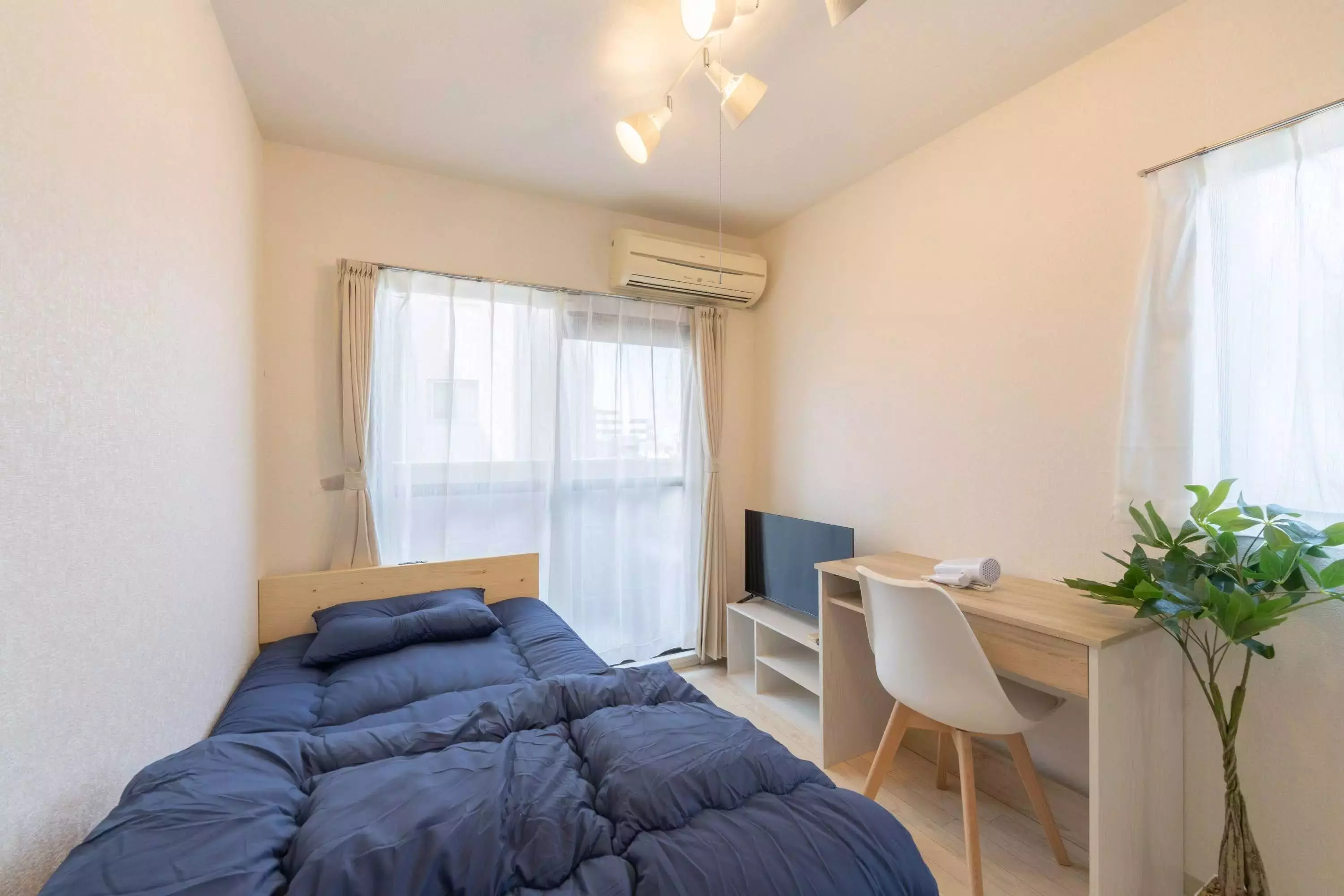
Furthermore, since the apartments come furnished with furniture and appliances, preparation for moving is minimal, making them popular with people who don't want to spend a lot of time or effort, as well as those living alone for the first time.
From single-room apartments to affordable shared housing options, there are choices to suit the lifestyle and needs of residents, allowing us to flexibly accommodate requests such as "I want to move in immediately with furniture included" or "I want low rent, but good access."
There are several Cross House properties in the Komagome Station/Hon-Komagome area, all within walking distance of the station, and located in quiet, peaceful residential areas or convenient locations.
Summary | Things to check when deciding whether to live in Komagome
Komagome Station is an area that combines a "quiet and peaceful neighborhood" with "excellent transportation access," but it also has drawbacks such as "few facilities for young people," "many hills and inconvenient location," and "few commercial facilities near the station." While rents and market prices are relatively low compared to other areas in Tokyo's 23 wards, some properties may have concerns about noise and safety, so prior checking is essential.
However, many people feel that it was a good place to live, and word-of-mouth and actual comments convey its advantages, such as being "quiet and safe," "convenient access to the city center," and "having ample shopping facilities."
If you're unsure whether or not to live near Komagome Station, the best approach is to compare multiple properties based on your lifestyle (commute time, quietness, proximity to shopping, safety at night, etc.) and then confirm these factors by viewing them in person.
If this town suits you, and if it matches your criteria of "prioritizing a quiet and peaceful life," "wanting access to the city center," and "wanting to keep rent low," then it should be an excellent choice.