
Basic information about Tokyo Beta (TOKYO β)
TOKYO β is a brand of shared apartments primarily operating in Tokyo. It has gained popularity for offering affordable rent and initial costs while still allowing people to live in the city, and has been chosen by students, young professionals, and those seeking short-term stays.
Operating company: GG House Management Co., Ltd.
As of 2026, Tokyo Beta is operated by GG House Management, Inc. Headquartered in Higashi-Nippori, Arakawa-ku, the company specializes in managing shared housing properties and operates multiple shared housing brands primarily in the Tokyo area. According to information published on their company website, they manage over 750 buildings and more than 10,000 rooms in Tokyo.
| item | Content |
|---|---|
| Company Name | GG House Management Co., Ltd. |
| location | Chibaya Building 4F, 5-51-8 Higashi-Nippori, Arakawa-ku, Tokyo |
| Establishment | January 29, 2016 |
| Main business | Management of shared houses and shared apartments |
When making inquiries or entering into a contract, we recommend that you directly check the latest company information and terms and conditions.
The difference between a shared apartment and a shared house
Tokyo Beta offers a type of accommodation called a "share apartment." It's slightly different from a typical share house, so let me clarify.
- Share house : Private room + shared living room + shared bathroom facilities (kitchen, shower, toilet, washroom). Residents have opportunities to see each other on a daily basis.
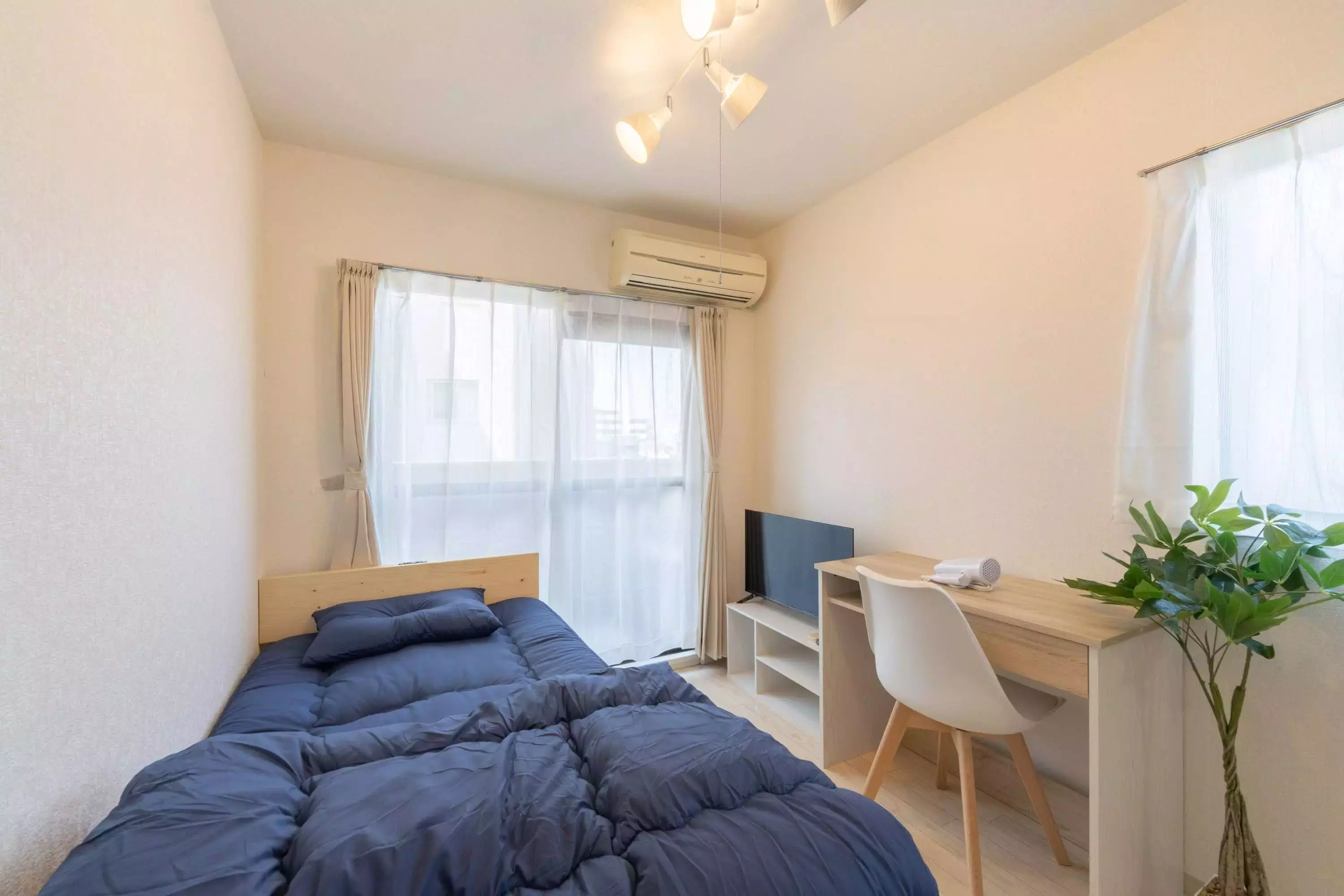
- Shared apartment (Tokyo Beta format) : Private rooms + shared bathrooms and kitchens. There is no shared living room, and each private room is equipped with a refrigerator, so the lifestyle is centered around being self-sufficient in one's own room.
The concept behind shared apartments is to "maintain the feeling of living alone while keeping costs down by sharing only the bathroom and kitchen facilities." Cross House offers this type of apartment as the "Shared Apartment/SA-XROSS Series," which is positioned similarly to Tokyo Beta's shared apartments.
Average rent and initial costs
The rent for properties on Tokyo Beta is generally in the range of 30,000 to 50,000 yen per month. In most cases, the buildings are existing properties that have been renovated and are older, and there are almost no new properties.
The basic fee structure is "rent + common area maintenance fee (15,000 yen) + system usage fee (1,500 yen)". Since the common area maintenance fee includes utilities (water, electricity, gas) and shared equipment costs, monthly expenses are easy to predict.
One thing to be aware of here is that there may be additional costs besides the rent, such as contract processing fees, cleaning fees upon moving out, and cancellation processing fees. Since these vary depending on the property and contract terms, be sure to check the contract before applying. The total cost may differ from the initial estimate.
Let's organize the reasons why people are searching for "Tokyo Beta is crazy".
The keyword "Tokyo Beta is crazy" is a popular search term with a large monthly search volume. However, what "crazy" means varies from person to person. We have summarized the concerns that frequently appear in search results into three points.

Comments regarding the number of shared facilities (toilets and showers)
Due to the design of shared apartments, toilets and showers are shared among residents. In some properties, one set is shared by around 10 people, and there have been reports of waiting times during morning commute hours.
This is a common issue not only for Tokyo Beta but for large-scale shared housing in general. If this concerns you, be sure to check the number of toilets and showers relative to the number of residents and the usage situation during peak hours when you view the property. The experience can vary greatly depending on the property.
Comments regarding noise and tenant behavior
There are also complaints regarding manners among residents, such as conversations in common areas, noise late at night, and how the shared kitchen is used. Since it is a shared residence, it is unavoidable that the experience will vary depending on the composition of the residents.
If your top priority is a quiet environment, you should choose an apartment with a completely private room rather than a shared apartment, or if you choose a shared house, select one with a small number of residents.
Voices regarding inconsistencies in management responses
Some people have reported that it took a long time to get a response after contacting them about a problem. GG House Management has a well-established management system, but because they manage a large number of properties, the speed of response can vary depending on the property and the timing.
Checking the "contact procedures in case of trouble" and "standard response times" before moving in will help prevent problems later on.
If you're concerned about the facilities and management system of a shared apartment, you might also want to consider Cross House, a shared house type with a living room that facilitates communication among residents.
Search for a room
Only furnished properties with appliances are listed!
The reasons behind the perception that "Tokyo Beta is dirty," and key points to look for during a viewing.
Many people search using the keywords "Tokyo Beta dirty." The cleanliness of a shared apartment is largely determined by a combination of the management company's cleaning frequency and how the residents use the space. This is a general principle applicable to shared housing in general.
Frequency and operation of cleaning of common areas
In most shared housing units, the management company arranges regular cleaning. However, the frequency and scope of cleaning vary from property to property; some are cleaned daily, while others are cleaned once a week.
Even with thorough cleaning by the management, dirt will accumulate quickly if residents leave the kitchen unattended after using it. This dependence on how residents use the facilities is a structural characteristic of shared housing.
Checklist for property viewing
During a viewing, we recommend checking the cleanliness with your own eyes, as this cannot be judged from photos or floor plans alone.

Six things you should definitely check when viewing a property
- Grease stains around the kitchen stove and sink
- Mold and drainage in the shower room
- Cleanliness of the toilet and whether or not it has been deodorized.
- The state of organization inside the shared refrigerator
- Management of the garbage disposal area (ensuring that the weekday rules are followed)
- Notices and announcements in common areas (showing how house rules are enforced)
If there are any items that concern you, you can ask the management staff on the spot, or you can ask if they can arrange an opportunity for you to speak directly with the residents.
Points to note when reading "Tokyo Beta reviews and ratings"
Searching for "Tokyo Beta reviews" or "Tokyo Beta reputation" will bring up both positive and negative comments. To make the most of this information, here are three key points to consider when reading reviews.
Trend towards positive reviews
- "The initial costs were low, making it easy to move to Tokyo."
- "The furniture and appliances were all provided, so I was able to start living there from the day I moved in."
- "There was an environment where I could talk to other residents, so I didn't feel lonely."
The focus is on satisfaction with cost, convenience, and human connections. The consistent theme is that it's suitable for people who want to establish a life in Tokyo in a short period of time.
Trends in negative reviews
- "There's a queue for the showers."
- "There was something about the residents' manners that bothered me."
- "The walls are thin, so I can hear everyday noises."
This section mainly discusses facilities, residents, and building structure, all of which are rooted in the structural characteristics of shared housing.
Assessing the reliability of personal accounts.
Since reviews are based on individual experiences, ratings for the same property can vary depending on the move-in date and the composition of the residents. When reading them, consider the following points to avoid making incorrect judgments.
Three key aspects to check when reviewing a PI (Linked Post).
- When was the review written? (The building's age and management policies may have changed since then.)
- Which property and which room type? (Even within the same brand, the conditions can vary greatly.)
- Is the cause of the dissatisfaction "related to the management company" or "specific to the property"?
At Cross House, we have a certain number of residents who move in from other companies' shared housing. The reasons we often hear are things like, "The atmosphere changed due to the turnover of residents," "The clutter of the facilities was heavier than expected," and "The terms were revised when it was time to renew the contract." Even with the same management and the same property, the experience can vary depending on when you move in and the composition of the residents. It's difficult to make a judgment based on just one review, so it's best to carefully consider multiple sources of information and perspectives.
Search for a room
Only furnished properties with appliances are listed!
Tenant screening, contract terms, and move-out rules
Keywords such as "Tokyo Beta screening" and "Tokyo Beta move-out" are also common search terms. Here are three points you should definitely check before signing a contract.
Selection criteria and required documents
Tokyo Beta's tenant screening process is said to have more lenient requirements compared to typical rental properties. It is designed to be accessible to students, freelancers, and short-term workers, with the requirement of providing identification documents and emergency contact information, but the use of a guarantor company is not required (please be sure to check the latest conditions when applying).
It's a misconception to think that "no guarantee company required = anyone can get in." A minimum level of credit check is conducted, and you may fail the screening process if there are deficiencies in your documents or discrepancies in your application. Please apply accurately.
What to do when rent payments are overdue: Key points to check in your contract
The contract outlines what happens if rent payments are late. In general, with shared apartments, the process may be designed to move quickly because the rent is low, so please be sure to check the following points before signing the contract.
Clauses regarding rent arrears that you should always check in your contract
- The timing of when collection efforts begin after arrears occur.
- Period from notice of cancellation to eviction
- Whether or not there are late payment penalties or cancellation fees.
- Arrangements regarding the disposal of remaining items
Leaving this ambiguous when signing a contract can lead to unexpected problems. If you have any questions during the explanation stage, be sure to ask them on the spot.
Rules for cancellation and moving out
The timing of cancellation requests, minimum contract period, cancellation fees, and the scope of restoration to the original condition vary depending on the property. If you might be moving in the short term, these conditions are important points to understand in advance.
Who should and shouldn't live in a shared apartment?
Suitable for
- For those who want to keep rent and initial costs to a minimum.
- For those who want to move to Tokyo without buying furniture or home appliances.
- Someone who can live with a reasonable distance from other residents.
- For those who want to move flexibly, from short-term to long-term.
People you should avoid
- For those who prioritize a quiet and private environment.
- People who easily get stressed out by waiting in line for shared facilities
- People who don't want to change their own lifestyle (e.g., working from home late at night, going to the office early in the morning)
If you feel that it might not be suitable, it's more practical to consider options other than shared apartments. In the next section, we'll introduce another way of living.
Search for a room
Only furnished properties with appliances are listed!
Alternatives to shared apartments: Shared houses (Cross House)
For those who have concerns about shared apartments, there are options such as shared house-style accommodations or choosing a different brand of "private room + shared bathroom facilities" type housing. Cross House is a management company that operates three types of accommodations: shared houses, shared apartments, and furnished apartments, and currently operates in seven prefectures: Tokyo, Kanagawa, Saitama, Chiba, Osaka, Aichi, and Fukuoka. Furthermore, Kyoto and Hyogo are scheduled to open in May 2026, expanding to nine prefectures. New properties are acquired every month, continuously increasing the number of rooms available to choose from.
You can choose from three different ways of living.

- Share house : Private room + shared living room + shared bathrooms. Designed to encourage natural interaction and communication among residents. Rent from 24,800 yen.
- Shared apartment (SA-XROSS series) : Private room with lock + shared bathroom facilities (no living room). Similar to Tokyo Beta, the appeal is "a feeling of living alone + cost reduction." Rent from 40,000 yen.
- Furnished apartments : One-room/1K apartments with private rooms and bathrooms. Perfect for those prioritizing privacy, furnished with appliances and furniture. Rent from ¥50,000.
Choose according to your preferred lifestyle.
Share houses tend to be a good fit for those who want an environment where they can talk to other residents or who want someone to talk to. Shared apartments tend to be a better fit for those who want to maintain some distance from others while keeping costs down. For those who prioritize independent living in a completely private room, furnished apartments are a good option.
Features of Cross House: No security deposit, key money, or brokerage fees; move-in as short as 7 days; furnished with appliances.
| item | Share house | Shared Apartments (SA-XROSS Series) | Furnished apartment |
|---|---|---|---|
| Room configuration | Private room + shared living room + shared bathroom | Private room with lock + shared bathroom facilities (no living room) | A fully private studio apartment/1K with a private bathroom/kitchen area. |
| Rent range | From 24,800 yen | From 40,000 yen | From 50,000 yen |
| Monthly fee | Rent + Common area maintenance fee 15,000 yen + System usage fee 1,500 yen | Rent + common area maintenance fee: 15,000 yen + system usage fee: 1,500 yen | Rent only (no common area fees or management fees) |
| Initial cost | 30,000 yen | 30,000 yen | 30,000 yen (with campaign discount; normally 50,000 yen) |
| For people like this | People who want to interact with other residents | For those who want to maintain their privacy while keeping costs down. | Those who prefer to live completely alone |
Common to all 3 types: No security deposit, key money, or brokerage fees / Move-in in as little as 7 days / Furnished with appliances / Free transfers between properties (including across prefectures) / Multilingual support (Japanese, English, Chinese, Korean) / Over 50,000 cumulative users.
Currently operating in 7 prefectures, with Kyoto and Hyogo opening in May 2026.
Currently operating in seven prefectures: Tokyo, Kanagawa, Saitama, Chiba, Osaka, Aichi, and Fukuoka. From May 2026, Kyoto and Hyogo prefectures will also be included, bringing the total to nine prefectures. New properties are continuously being acquired every month, so the available properties and room types will be updated with each search. Please check the official website for the latest vacancies.
FAQ
Who is the operating company for Tokyo Beta?
As of 2026, Tokyo Beta is operated by GG House Management Co., Ltd. (Higashi-Nippori, Arakawa-ku, Tokyo; established in 2016). Please check the latest company information and conditions directly when applying.
Why is Tokyo Beta being called "crazy"?
The main concerns stem from three common issues with shared housing: the number of shared facilities (toilets and showers), the residents' manners and noise levels, and the responsiveness of management. These concerns are also discussed in online reviews and testimonials. If you have any concerns, it's best to check them during a viewing and review the contract terms. This article outlines the items you should check before signing a contract.
Is the Tokyo Beta screening process strict?
It is said that the conditions are set more leniently than for typical rentals. Designed to be easily accessible to students, freelancers, and short-term workers, it requires identification documents and emergency contact information, but the use of a guarantor company is not required (please check the latest conditions when applying).
Is the rumor that "Tokyo Beta is dirty" true?
The condition of a shared residence varies depending on the property and the time of year. Since the condition of a shared residence depends on both the frequency of cleaning by the management and how the residents use it, it's impossible to make a uniform judgment. The best way to be sure is to directly check the common areas (kitchen, shower, toilet, and garbage disposal area) during a viewing.
If I fall behind on rent payments, will I be evicted immediately?
The terms and conditions are outlined in the contract. In some cases, shared housing with low rent may have a system in place that allows for quicker processing of arrears, so be sure to check the timing of when collection efforts begin, the notice period for termination, and whether or not there are penalties before signing the contract.
Are there any options other than Tokyo Beta?
Instead of a shared apartment (private room + shared bathrooms), you can also consider a shared house (private room + living room + shared bathrooms) or a furnished apartment (fully private room). Cross House is currently operating in seven prefectures: Tokyo, Kanagawa, Saitama, Chiba, Osaka, Aichi, and Fukuoka, with plans to open in Kyoto and Hyogo from May 2026. Shared houses have an initial fee of 30,000 yen, and furnished apartments have an initial fee of 30,000 yen as part of a campaign (normally 50,000 yen). Both options include no security deposit, no key money, no brokerage fees, move-in in as little as 7 days, and furnished apartments.
summary
TOKYO β is a shared apartment complex operated by GG House Management Co., Ltd. It is popular because it allows residents to live in Tokyo while keeping rent and initial costs down.
The reason why people search for "terrible" or "dirty" is due to common issues across shared housing, such as the number of shared facilities, the manners of residents, and the inconsistency in management. Rather than uniformly labeling them as negative, the most reliable way to make a decision is to see for yourself during a viewing.
If you feel that the structure of a shared apartment itself doesn't suit you, you can also consider other housing options such as a shared house with a living room or a fully furnished apartment with private rooms.
Cross House currently operates in seven prefectures: Tokyo, Kanagawa, Saitama, Chiba, Osaka, Aichi, and Fukuoka, with plans to open in Kyoto and Hyogo from May 2026. New properties are continuously being acquired every month. Share houses have an initial cost of 30,000 yen, and furnished apartments are currently on sale for an initial cost of 30,000 yen (normally 50,000 yen). In both cases, there is no security deposit, key money, or brokerage fee, move-in is possible in as little as 7 days, and furnished apartments are available. Moving between properties is also free, allowing you to move to a place that suits your lifestyle.
Ultimately, seeing the property with your own eyes during a viewing is the most reliable way to make a decision.If you feel that the structure of a shared apartment itself doesn't suit you, you can also consider other housing options such as a shared house with a living room or a fully furnished apartment with private rooms.
Cross House currently operates in seven prefectures: Tokyo, Kanagawa, Saitama, Chiba, Osaka, Aichi, and Fukuoka, with plans to open in Kyoto and Hyogo from May 2026. New properties are continuously being acquired every month. Share houses have an initial cost of 30,000 yen, and furnished apartments are currently on sale for an initial cost of 30,000 yen (normally 50,000 yen). In both cases, there is no security deposit, key money, or brokerage fee, move-in is possible in as little as 7 days, and furnished apartments are available. Moving between properties is also free, allowing you to move to a place that suits your lifestyle.